How Airbag Compression Works in a Massage Chair
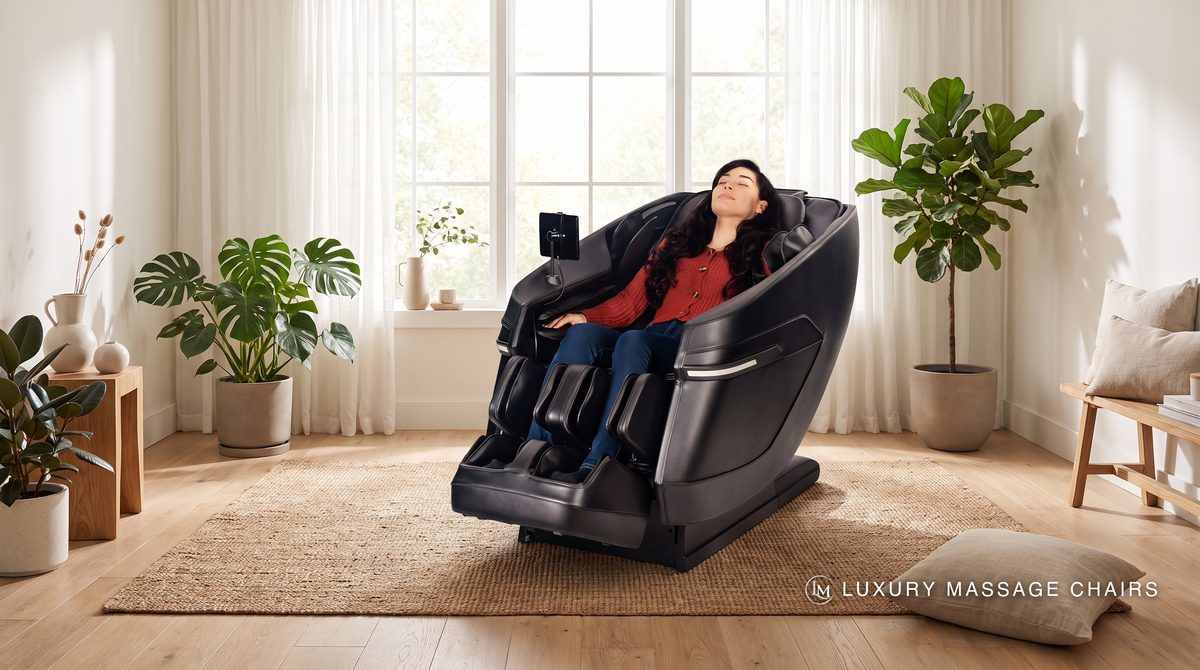
When people picture a massage chair, they usually think of the rollers moving up and down the back. That is only half of what a modern chair does. The other half comes from massage chair airbags, the air cells that inflate and deflate to hug, squeeze, and release different parts of your body. If the rollers are the hands, the airbags are the broad, wrapping pressure of a full embrace.
Airbag compression is the reason a good chair can work your arms, shoulders, hips, and calves at the same time the rollers handle your spine. It is a different sensation entirely, less about pinpoint kneading and more about a rhythmic squeeze that pushes tension out of the limbs. Many people find it is the part they miss most when they sit in a chair that skips it.
This guide explains what the air cells are, how the squeeze and release cycle feels, where the airbags usually sit, and how to dial the intensity so the compression fits your body rather than fighting it.
What airbags actually are
Inside the armrests, seat, and leg wells of a chair sits a network of flexible air pockets. A quiet pump fills them with air on a schedule set by the program, and valves release that air a moment later. As each pocket inflates it presses against your body, and as it deflates the pressure lifts away.
That is the whole mechanism, and its simplicity is the point. There are no gears grinding against your skin and no hard parts poking a limb. Instead you get a soft, even pressure that spreads across a wide area. A single airbag can wrap most of a forearm or a calf, so the squeeze feels broad and cushioned rather than sharp.
The number of airbags varies from a handful in a simpler chair to dozens in an elaborate one. More airbags generally means more zones can be worked and the compression can move in more detailed patterns. It is not the only thing that matters, but it is a useful signal of how much the chair invests in this style of massage.
The squeeze and release sensation
The heart of airbag work is a rhythm. A group of cells inflates, holds for a beat, then lets go, and the cycle repeats and travels. That squeeze and release pattern is what your body reads as a massage rather than a static press.
The feeling is hard to describe until you try it, but most people compare it to a firm, caring grip that moves. When the calf airbags fill, it is like two hands wrapping your lower leg and gently milking upward. When the arm cells inflate, your forearm feels held and worked at once. The release is just as important as the squeeze, because that moment of letting go is when the tissue rebounds and fresh circulation flows back in.
Good programs vary the rhythm so it never feels mechanical. A slow, deep squeeze suits a relaxing wind down, while a quicker pulse feels more invigorating. The chair often stacks these patterns, wrapping the hips while the calves pulse, so the whole lower body feels involved at once.
Where the air cells do their work
Airbags show up in the places rollers cannot easily reach. A few zones matter most.
- Arms and hands. Cells in the armrests wrap the forearms and sometimes the hands, a relief for anyone who types or grips tools all day.
- Shoulders. Airbags near the top of the seat cradle and gently press the shoulders inward, easing the spot where stress tends to gather.
- Hips and seat. Cells along the sides of the seat squeeze the hips and outer glutes, an area most of us never think to work but which holds a surprising amount of tension.
- Calves and feet. The leg well is where airbags shine, wrapping the calves and pressing the soles for a deeply satisfying lower leg massage.
The shoulder and hip compression is worth calling out. Those broad, wrapping squeezes reach muscle groups that rollers alone struggle with, which is why airbags and rollers together feel so much more complete than either on its own. If lower leg comfort is a priority for you, our guide to a foot and calf massage chair goes deeper on that zone.
How airbags and rollers work together
A chair feels whole when the two systems cooperate. The rollers travel the spine with focused kneading while the airbags handle the limbs and the broad areas. The result is a massage that surrounds you instead of tracing a single line up your back.
Heat often joins the party too. Warm tissue accepts compression more willingly, so a chair that combines warmth with air cells tends to feel deeper at a gentler setting. Our piece on heat therapy in a massage chair explains why that pairing works so well.
The track that carries the rollers shapes how the two systems overlap. A longer track that follows the body down past the hips leaves more room for the airbags to coordinate with the rollers along the seat. If that mechanical side interests you, our comparison of an L track versus an S track massage chair lays out the difference clearly.
Adjustable intensity and why it matters
Here is the feature that separates a chair you love from one you tolerate. Adjustable intensity lets you set how firmly the airbags squeeze, and getting it right is the difference between relief and discomfort.
Everyone has a different tolerance. A strong, deep compression that feels perfect to one person feels like too much to another, and the same person might want gentle pressure one day and a firm squeeze the next. A quality chair usually offers several levels, so you can start soft and work up as your body adjusts.
A sensible way to find your setting looks like this.
- Begin at a low or medium level for the first minute so your body reads the rhythm
- Notice whether the squeeze feels supportive or straining
- Raise the intensity one step at a time until the pressure feels firm but still pleasant
- Back off a notch the moment it tips into discomfort
The goal is pressure that makes you exhale, not tense up. If you find yourself bracing against the squeeze, it is too strong, and dialing it down will actually give you more benefit because your muscles can finally relax into it.
A brief honesty note. Compression is a comfort and relaxation aid, not a medical device, and it does not treat or cure circulation problems or injuries. If you have a clotting disorder, recent surgery, significant swelling, or any vascular condition, check with a clinician before using strong leg compression. For most healthy people, though, adjustable air pressure is simply one of the most pleasant things a chair can do.
Getting the most from airbag compression
A few small habits sharpen the experience. Wear lighter clothing so the cells can wrap you evenly rather than bunching against thick fabric. Rest your arms fully inside the armrests so the hand and forearm cells have something to hold. Let your legs sit deep in the well so the calf airbags reach the whole muscle rather than just the top.
Breathe with the rhythm. Exhaling as a cell inflates helps your body accept the squeeze, and the compression starts to feel like it is working with your breath rather than interrupting it. Over a few sessions you will learn which zones your body craves most, and many chairs let you emphasize those areas.
If you are still weighing which features deserve your budget, our overview of a massage chair features guide puts airbag compression in context alongside everything else a chair can offer.
Frequently Asked Questions
What do the airbags in a massage chair actually do?
They inflate and deflate to squeeze and release different parts of your body, mainly the arms, shoulders, hips, and calves. Where the rollers knead your spine with focused pressure, the airbags apply a broad, wrapping compression to the limbs and wider areas. Together they turn a back massage into a full body experience. Many people find the calf and hip compression the most satisfying part of the whole chair.
Does airbag compression hurt?
It should never hurt. A good squeeze feels firm and supportive, the kind of pressure that makes you exhale and relax. If it feels like straining or pinching, the intensity is set too high, and lowering it will give you more benefit because your muscles can finally let go. Start at a lower level and raise it slowly until the pressure feels deep but pleasant.
Can I adjust how strong the airbags squeeze?
Yes, and this is one of the most important features to look for. Adjustable intensity lets you match the compression to your body and your mood, since tolerance varies from person to person and even day to day. Most quality chairs offer several levels. Begin gentle, work up one step at a time, and settle on the firmest pressure that still feels comfortable rather than the strongest the chair can produce.
Are more airbags always better?
Not automatically, but more air cells usually means more body zones can be worked and the compression can move in more detailed patterns. Quality matters as much as quantity, since the smoothness of the squeeze and release rhythm and the adjustability of the pressure shape the experience just as much as the count. Think of the airbag number as one useful signal rather than the whole story.
Is airbag leg compression safe for everyone?
For most healthy people it is a comfortable, relaxing feature. Some individuals should be cautious, including anyone with a clotting disorder, recent surgery, significant leg swelling, or a vascular condition. Compression is a relaxation aid, not a medical treatment, so it does not cure circulation problems. If any of those apply to you, or if you notice pain or swelling, check with a clinician before using strong leg compression.
Feel the full squeeze
Rollers get the attention, but airbag compression is what makes a chair feel like it is holding you rather than simply working your back. The squeeze and release of the air cells reaches your arms, shoulders, hips, and calves, and adjustable intensity lets you tune all of it to your own body.
When you are ready to compare how different chairs handle their air cells, browse the collection and pay attention to the zones each one covers and how finely you can set the pressure. The right compression, matched to your tolerance, is the quiet feature you will end up loving most.
The chair featured in this article
Kyota Zenyu M338 Massage Chair
View this chair →