S-Track vs L-Track vs SL-Track Massage Chair Rollers Explained
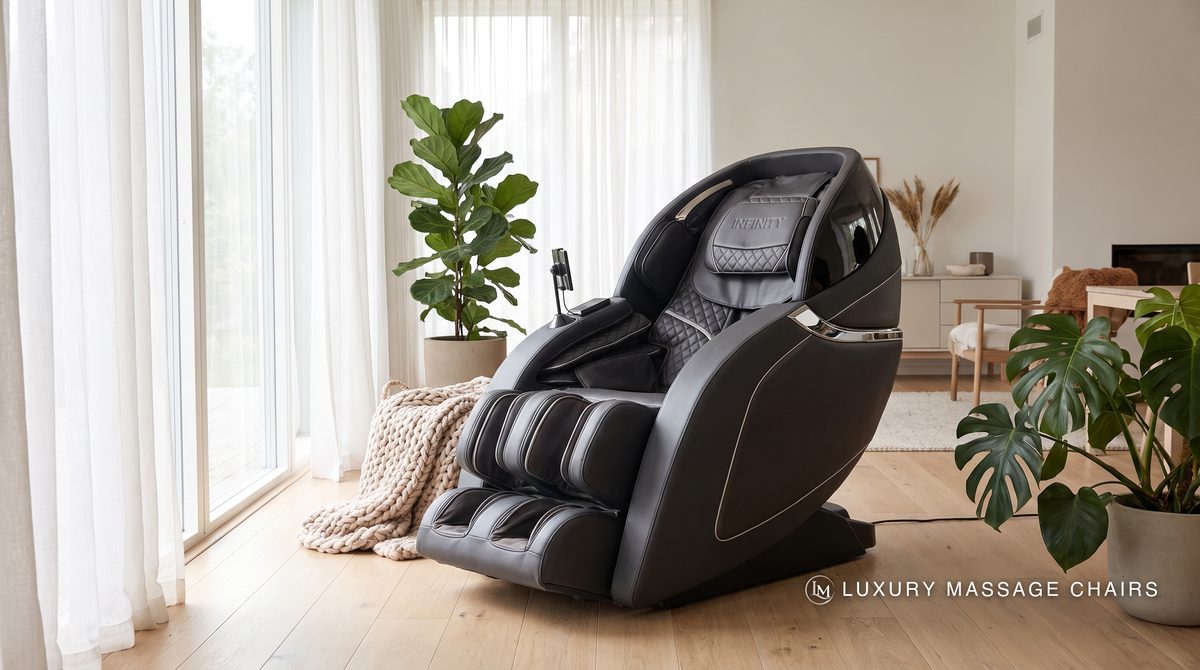
Two massage chairs can have identical rollers and feel completely different, and the reason is usually the track. Choosing between S-track vs L-track vs SL-track quietly determines how much of your body actually gets massaged, from your neck all the way down to your glutes and hamstrings.
The track is the rail the rollers ride on behind and beneath you. Its shape sets the path the rollers can travel, which means it sets the boundary of what the chair can reach. Get this choice right and the massage covers the areas that hold your tension. Get it wrong and you may buy a beautiful chair that stops exactly where you need it most.
This guide explains the main massage chair track types in plain terms, shows how far each one extends, and lays out the honest trade-offs so you can match the track to your body and your goals.
What a roller track actually is
Picture the frame inside the backrest. The rollers are mounted on a carriage, and that carriage rolls along a fixed rail. The rail's curve is the track. It cannot move outside its own shape, so the track is the single biggest factor in coverage, more than the number of roller dimensions.
Coverage is the whole game here. A chair with brilliant 4D rollers still cannot massage a spot the track never carries the rollers to. That is why experienced buyers look at track shape early, right alongside the 2D, 3D, or 4D roller question.
S-track follows the curve of your spine
The S-track is named for its shape. It follows the natural S-curve of the human spine, arcing in at the lower back and out around the shoulders. It typically runs from the base of your neck down to your lower back or tailbone.
Because it hugs the spine's curve, an S-track keeps the rollers in close, consistent contact along your back. Many people find the pressure on the upper and mid back feels especially precise and well-targeted, since the rollers stay tucked into the contour rather than lifting away from it.
The limit is where it ends. A traditional S-track stops around the lower back, so it does not continue down under the seat.
Where an S-track shines
- Focused, contour-hugging work on the neck, shoulders, and upper back
- A slightly more compact backrest footprint in some designs
- Buyers whose tension lives mostly above the waist
If your trouble spots are your neck and shoulders from desk work, an S-track can feel wonderfully on-target. For broad relaxation and upper-body relief it remains a perfectly good choice.
L-track reaches the glutes and hamstrings
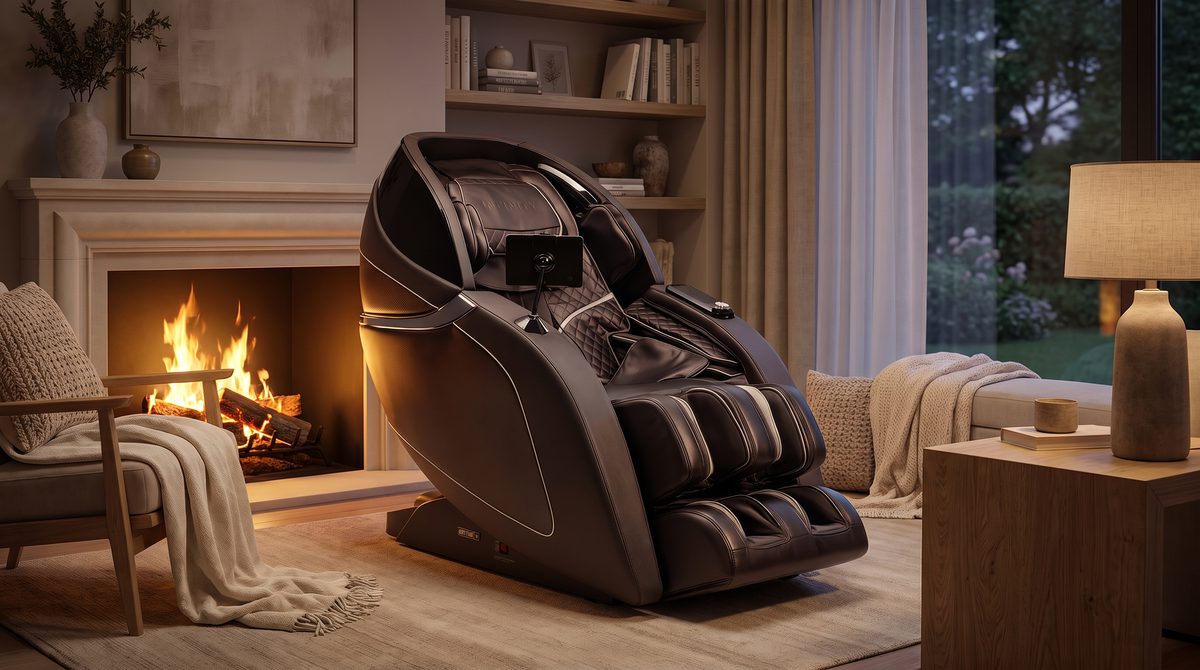
The L-track starts the same way, following the spine, then keeps going. Instead of stopping at the lower back, the rail bends at the hips and continues down under the seat, tracing an "L." That extension lets the rollers travel across the glutes and often into the upper hamstrings.
This is a meaningful amount of extra coverage. The glutes and hips are large, powerful muscles that carry a lot of load and tension, especially if you sit all day, stand all day, or train hard. An S-track cannot reach them. An L-track can, and for many buyers that lower stretch is the feature they end up valuing most.
- Continuous massage from the neck through the glutes and upper hamstrings
- Relief for the hips and lower back, common trouble zones
- A strong match for anyone focused on back pain, tight hips, or athletic recovery
It is worth understanding why the glute work feels so different from ordinary seat compression. An S-track hands the lower body off to airbags once the rollers stop at the lower back, and airbags squeeze rather than knead. An L-track keeps actual rollers moving across the glutes, so you get kneading pressure on muscle rather than a broad squeeze. For anyone whose desk job or training loads up the hips, that distinction is the whole reason the extension matters.
SL-track combines both shapes
The SL-track is the newer answer that tries to keep the best of each. It follows the S-curve of the spine for close upper-back contact, then extends into the long L-shaped reach under the seat. In other words, it aims to give you the precise spine-hugging feel of an S-track and the glute-to-hamstring coverage of an L-track in one rail.
For most buyers today this is the ideal, and it is why the SL-track has become common on modern premium chairs. The trade-offs are modest. A longer track can mean a slightly larger seat base, and a great deal still rides on how well the whole chair is tuned. Still, if a chair pairs an SL-track with strong rollers, you rarely have to choose between reach and contour.
- The spine-hugging contact of an S-track up top
- The glute and hamstring reach of an L-track down low
- The most complete coverage for whole-body sessions
J-track, the shorter cousin
You will occasionally see "J-track." It sits between the shapes. Like the letter, it follows the spine and curves under at the bottom, but the lower extension is shorter than a full L-track or SL-track. Think of it as reaching the glutes partially rather than continuing well into the hamstrings.
J-track is less standardized as a term, and different makers use it a little differently, so treat it as a rough label rather than a precise spec. If a chair is described as J-track, the practical question to ask is simple. How far down does the massage actually go? Where it ends matters far more than the letter on the brochure.
So which track should you choose?
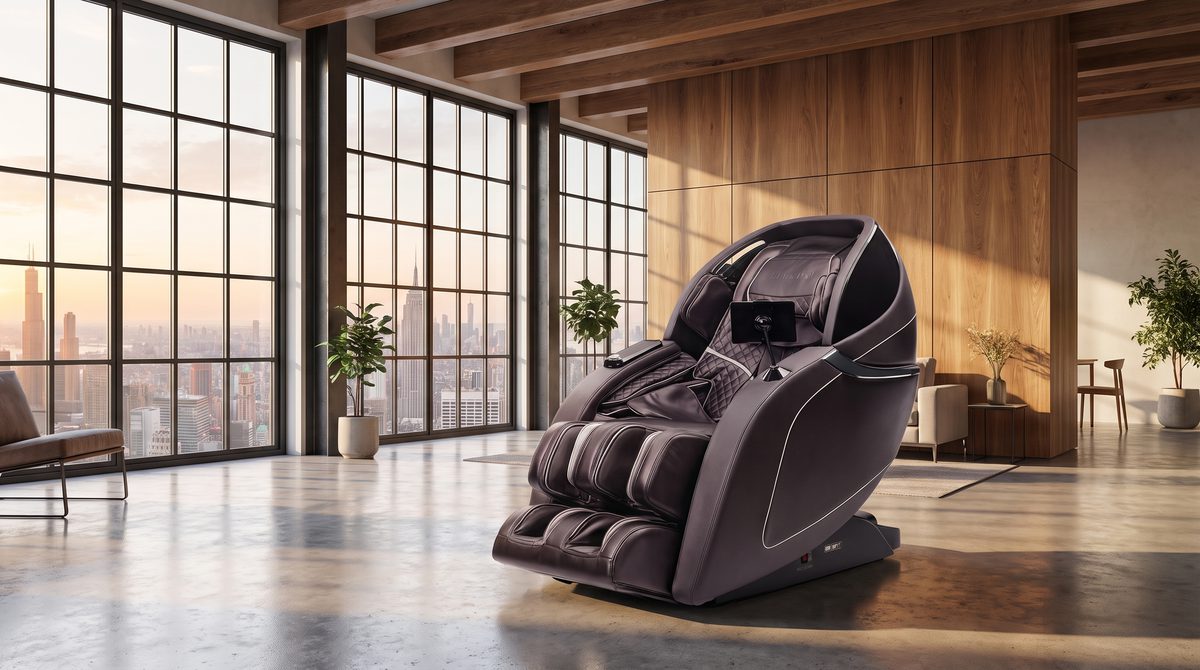
For most buyers today, an SL-track or L-track is the safer default, because coverage is hard to add later and easy to appreciate every session. If your tension spans your lower back, hips, or glutes at all, the extended reach earns its place quickly.
An S-track still makes sense in specific cases.
- Your needs are concentrated in the neck, shoulders, and upper back
- You strongly prefer that tight upper-spine contour
- A particular S-track chair fits your space or budget better
A quick way to decide is to point to where your body holds tension. Above the waist only, and an S-track will serve you well. Anywhere from the lower back down, and an L-track or SL-track is worth prioritizing.
Track shape is only one piece of a good match, of course. Your height, the roller dimensions, and features like heat and air compression all factor in, which is why it helps to read this alongside our full buying guide. If back or hip pain is your main driver, and especially if it is persistent, it is worth checking with a clinician about your specific situation before relying on any chair for relief.
A note on fit and height
Track length interacts with your height. A tall user on a short track may find the neck rollers do not climb high enough, while a shorter user on a long track may find the lower rollers travel past their glutes. This is where a proper body scan matters. It maps your spine and shoulders so the chair positions its strokes within the track it has. A great scan cannot extend a track, but it makes the most of whatever track you buy.
Frequently Asked Questions
What is the difference between S-track, L-track, and SL-track?
An S-track follows the S-curve of the spine from the neck to the lower back. An L-track follows the spine and then bends at the hips to continue under the seat, reaching the glutes and upper hamstrings. An SL-track combines both, giving you the spine-hugging contact of an S-track and the extended lower reach of an L-track in one rail.
Which massage chair track type is best for lower back and hip pain?
An L-track or SL-track, because both carry the rollers down past the lower back into the glutes and hips, where a lot of that tension actually sits. Pair it with adjustable depth for the best control. If pain is ongoing or severe, see a clinician about the underlying cause rather than relying on a chair alone.
Is an L-track always better than an S-track?
Not universally, but it covers more of your body, and coverage is difficult to add after purchase. For most buyers the extra reach into the glutes and hamstrings is the deciding advantage. An S-track can feel more precise on the upper back, so if that is your only concern it remains a solid pick.
Does track shape matter more than 3D or 4D rollers?
They answer different questions. Track shape decides where the massage reaches, and roller dimensions decide how the massage feels. Both matter, but no amount of 4D refinement can massage a spot the track never reaches, so it is smart to settle coverage first.
The bottom line
The track is the quiet decision that shapes your whole experience. An S-track hugs the spine to the lower back, an L-track keeps going into the glutes and hamstrings, and an SL-track blends both. Decide where your body needs the most work, then choose the track that reaches it. When you are ready to compare real chairs by track and roller type, explore the full collection and match the reach to your body.
The chair featured in this article
Palisade 4D Max Massage Chair
View this chair →