2D vs 3D vs 4D Massage Chairs and What the Numbers Really Mean
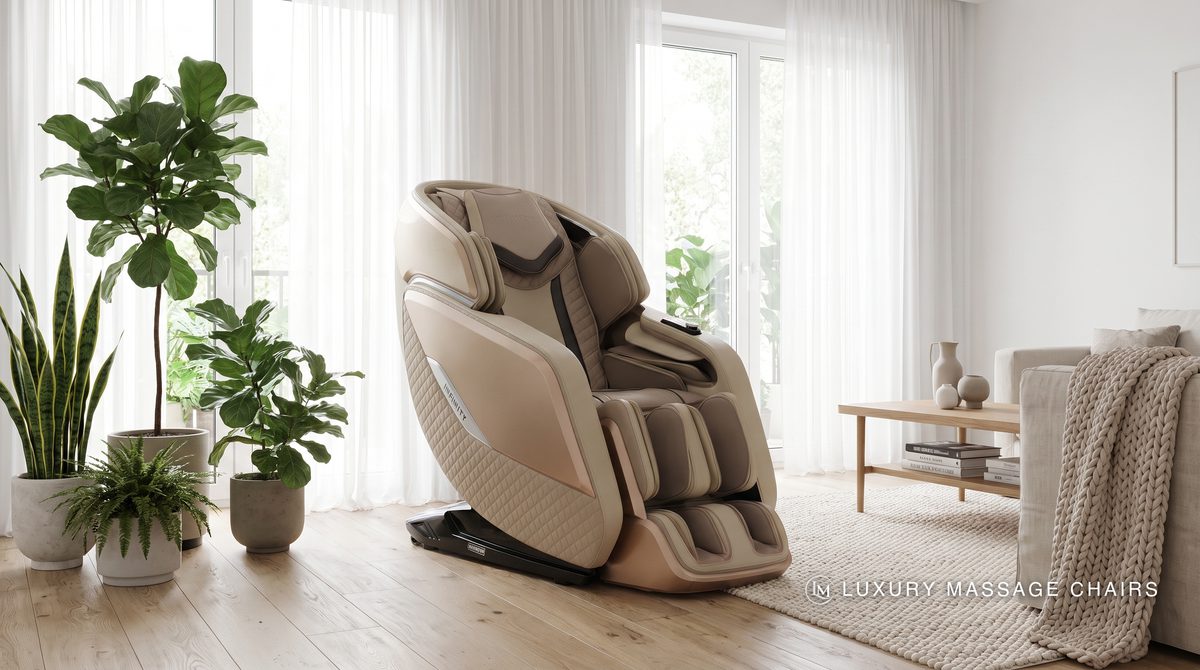
Walk through any massage chair showroom and you hit the same wall of jargon. One chair is 2D, the next is 4D, and the price climbs with every extra dimension. Sorting out a 2D vs 3D vs 4D massage chair is the fastest way to cut past the marketing and see what you are actually paying for.
The good news is that the numbers describe something real and easy to grasp once you know where to look. Each "D" is a direction the rollers can move. More directions mean a massage that maps more closely to what human hands do.
This guide breaks down each tier in plain language and shows who genuinely benefits from paying up, so you can shop with confidence instead of guessing.
What the "D" actually counts
The rollers are the heart of any massage chair. They sit inside the backrest on a small carriage that travels along a track behind you. The number of dimensions tells you how many independent ways that carriage and its rollers can move.
- 2D moves on a flat plane, meaning up and down your spine and side to side across it
- 3D adds depth, pushing the rollers out toward you and back in so pressure can go deeper
- 4D adds a time element, varying the rhythm and speed of the stroke to feel more human
That is the whole concept. Everything else is refinement. Keep that map in your head and the marketing copy stops being confusing.
2D means the flat plane
A 2D chair moves its rollers along two axes. They travel up and down the length of your back and shift left and right to work either side of the spine. Combine those two motions and the chair can trace kneading circles, rolling passes, and tapping across a flat surface.
What a 2D chair cannot do is change how far the rollers stick out. The depth is fixed by the shape of the track and by how hard you press back into the seat. On a good 2D chair the sensation is smooth and pleasant, closer to a firm rub than a deep-tissue session.
Who a 2D chair suits
- First-time buyers who mostly want to unwind after work
- Anyone sensitive to intense pressure who prefers a gentler touch
- Budget-focused shoppers who still want zero gravity, heat, and airbags
If your goal is relaxation rather than working out deep knots, a well-built 2D chair delivers real value. It is also where the most accessible pricing lives, which matters if you are weighing whether the whole category is worth it for your household.
3D adds depth
A 3D chair keeps everything a 2D does and adds a third axis. The rollers can extend forward, out of the track, and retract back into it. This is a bigger leap than it sounds. Suddenly the chair controls how deep the pressure goes, independent of how hard you lean.
Most 3D chairs let you dial intensity up or down across several levels. On a low setting it feels like a light, broad massage. Turn it up and the rollers press into the muscle with the kind of depth that reaches tension a 2D chair glides over. For anyone carrying chronic tightness, that adjustability is the difference between "nice" and "that actually helped."
Depth control is also why 3D and 4D chairs pair so naturally with a deep recline. When the frame holds your weight, the rollers sink further for the same pressure, which is the whole idea behind a good zero-gravity mode.
Who a 3D chair suits
- People with real muscle tension who want to control intensity
- Taller or broader users who need the rollers to reach further
- Buyers who want a noticeable step up without flagship pricing
4D adds time and rhythm
Here is where the naming gets slightly loose, because "4D" is not a fourth spatial direction. There is no such thing. The fourth dimension that marketers borrow is time. A 4D chair takes the same three axes of movement and varies the speed and rhythm of the stroke as it works.
Why does that matter? A skilled masseuse does not press at one constant tempo. They pause on a stubborn knot, speed up over broad muscle, ease off, then lean back in. A fixed-speed roller cannot do that. A 4D roller can slow down, dwell, and accelerate, so the massage feels less mechanical and more like a pair of hands that is paying attention.
The best 4D chairs layer this rhythm variation over precise depth control, so a single program can move from a gentle warm-up to a focused deep-tissue passage and back down to a soothing finish. This is the tier where flagship chairs live, and it is also the tier that has trickled down to more affordable models in recent years.
There is a subtle payoff to that rhythm variation that is easy to miss until you feel it. Your body stops anticipating the next stroke. When rollers move at one fixed tempo, you unconsciously brace for the pattern, and bracing works against the massage. A 4D stroke that changes pace keeps you from tensing up, so the muscle stays relaxed and the pressure lands better. That is a big part of why a good 4D chair feels less like a machine and more like hands.
Who a 4D chair suits
- Buyers who want the most lifelike, therapist-style massage available
- Athletes and heavy trainers focused on recovery between sessions
- Anyone planning to keep the chair for years and use it daily
3D vs 4D, is the jump worth it?
This is the most common question in the whole category, and the honest answer is that it depends on how you will use the chair. The 3D vs 4D difference comes down to timing. 3D decides how deep the rollers press. 4D keeps that depth control and adds variation in speed and rhythm over time.
For daily users chasing a genuinely therapist-like massage, the rhythm variation is something you notice every session, and it earns its place. For someone who mostly wants to relax now and then, a strong 3D chair often delivers most of the satisfaction for less money. Neither answer is wrong. It is about matching the tier to the job.
Does more dimensions always mean better?
Not automatically, and this is where honest advice matters. A superb 3D chair from a strong maker will out-massage a mediocre 4D chair from a weak one. The dimension count tells you the ceiling of what the rollers can do, not how well the whole chair is engineered, tuned, and built.
Other factors carry just as much weight.
- The track shape, which decides how much of your body gets covered, explained in our track types breakdown
- The quality of the auto programs and how naturally they flow
- Fit for your height and body type, since even great rollers underwhelm if they land in the wrong spots
- Supporting features like heat, air compression, and foot rollers, covered in our features that actually matter guide
So treat the D-number as one input, not the verdict. Match it to how you plan to use the chair, then judge the rest of the package.
How to shop across the tiers
A simple way to decide is to start with the job you want done, not the spec sheet. If you mainly want to decompress, a 2D or entry 3D chair is plenty. If you have persistent knots and want to control how deep the work goes, a 3D chair is the sweet spot for most buyers. If you want the closest thing to a human therapist and expect to use it daily for years, a 4D chair earns its keep.
Prices span a wide range across these tiers, from around $1,599 for compact entry models to roughly $16,999 for flagships, so there is a legitimate option at almost any budget. Our price guide maps out what each band typically buys. The smart move is to fix your budget first, then pick the highest tier that fits it and matches how you actually plan to use the chair.
Frequently Asked Questions
Is a 4D massage chair really worth the extra money?
For daily users and anyone chasing a genuinely therapist-like massage, yes. The rhythm variation makes the experience feel more human and less mechanical, which many people notice every session. If you only plan to use the chair occasionally to relax, a strong 3D chair often delivers most of the satisfaction for less.
What is the actual difference between 3D and 4D?
3D lets the rollers adjust depth, pressing out toward you and back in. 4D keeps that depth control and adds variation in speed and rhythm over time, so the stroke can pause, slow, and accelerate like human hands. Think of 3D as how deep, and 4D as how deep and with what timing.
Does a higher number mean a stronger massage?
Not necessarily. All three tiers can feel firm or gentle depending on the settings. What 3D and 4D add is finer control over depth and rhythm, not raw force. A quality 2D chair on a high setting can still feel quite firm.
Can beginners just start with a 2D chair?
Absolutely. A well-made 2D chair with zero gravity, heat, and airbags gives a relaxing, forgiving experience and tends to be the most affordable way into the category. You can always move up later once you know what your body responds to.
Find your tier
The dimension count is one of the clearest specs in this whole category once you know it maps to directions of movement. 2D is flat, 3D adds depth, and 4D adds timing. Match that to how you actually plan to use the chair, then look hard at build quality, track shape, and fit before you decide. When you are ready to compare real models side by side, browse the full collection and start with the tier that fits your goals.
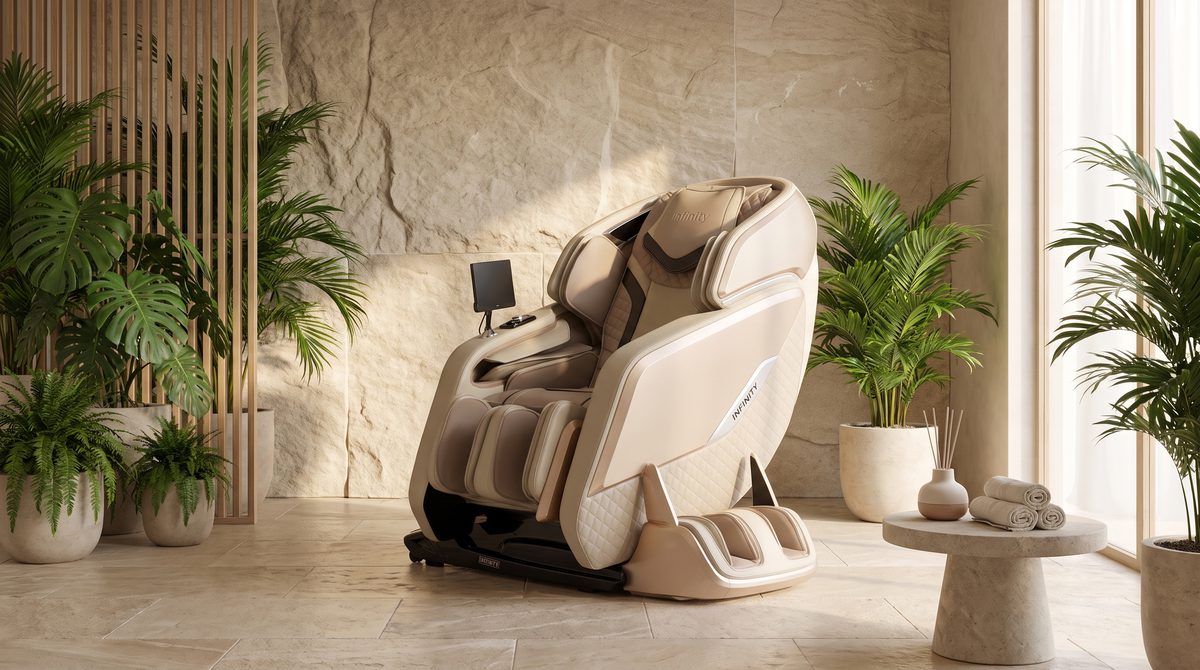
The chair featured in this article
Sovana 4D DualPro Massage Chair
View this chair →