How Massage Chair Body Scan and AI Personalize Your Session
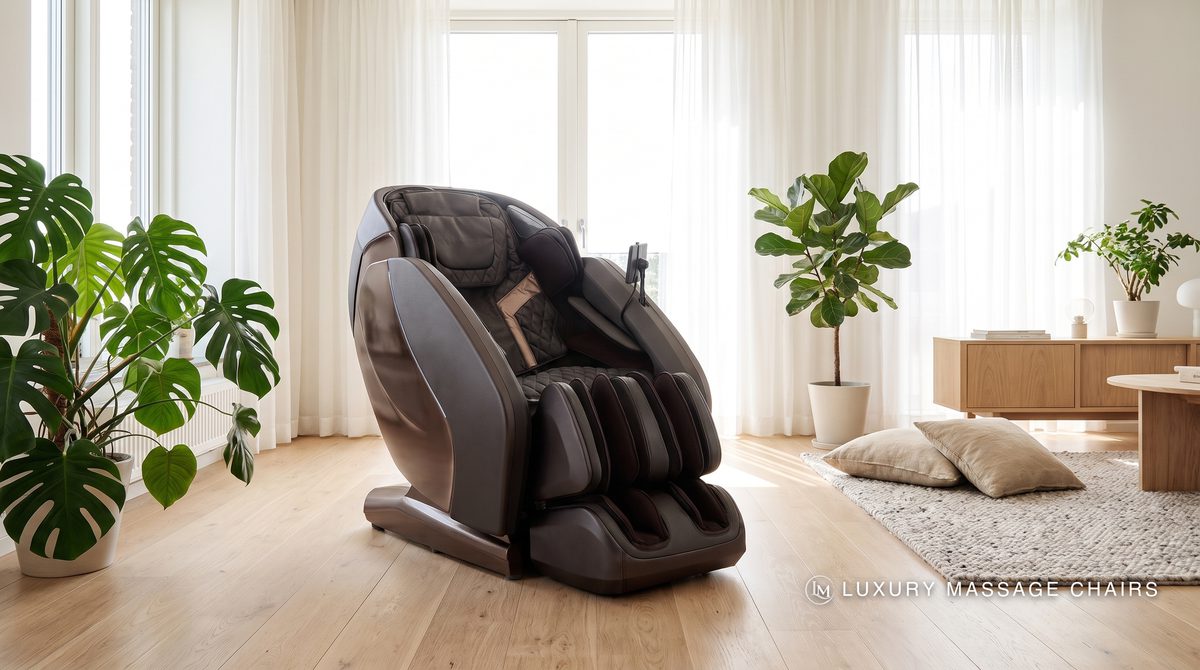
Sit down in a modern massage chair and the first thing it does is study you. Before a single program starts, the rollers glide up and down your back, quietly taking measurements. That opening pass is the massage chair body scan, and it is the feature that separates a chair that fits you from one that just runs a generic routine.
Personalization is the whole promise of a smart chair. Your spine, your shoulder height, and your problem areas are not the same as anyone else's, so a one-size massage lands in the wrong spots. Body scanning, the auto programs of an AI massage chair, voice control, and companion apps all exist to close that gap and shape each session around your actual body.
This guide explains how body scanning works, what the AI and auto programs are really doing, and how voice and app control fit in, so you can tell genuinely smart features from marketing gloss.
How a body scan actually works
When you first recline, the rollers make one or two slow passes along your back. Sensors track the pressure and position as they travel, building a rough map of your body. The scan finds where your neck begins, how your shoulders sit, the curve of your spine, and where your lower back lands.
From that map the chair sets its roller path. The goal is simple but important. It puts the shoulder kneading on your shoulders, not your neck, and keeps the spine strokes on either side of your backbone rather than on it. Without a scan, a tall user and a short user get the exact same roller positions, and at least one of them ends up mismatched.
- The scan locates your shoulders so upper-body work lands correctly
- It maps your spine so rollers stay beside the bone, not on it
- It sets a starting pressure profile the programs build from
A good scan does not fight your track shape. It works within it, positioning strokes as well as the physical rail allows. That is why scan quality and track quality both matter when you compare chairs.
Why the scan matters more than it sounds
Roller quality gets all the attention, but a brilliant 4D roller aimed at the wrong vertebra is just a precise mistake. The scan is what aims it. On the best chairs you can fine-tune the result afterward, nudging the shoulder position up or down if the automatic read is slightly off, which is a genuinely useful feature for anyone with a less common build.
Scans also vary in quality between chairs, and it is a difference worth asking about. A basic scan takes a single quick pass and makes a rough estimate. A more sophisticated one takes multiple passes, reads more points along your back, and produces a closer fit, especially around the shoulders, where being an inch off is the difference between relief and an unwanted crick in the neck. When two chairs seem similar on paper, the accuracy of the scan is one of the quieter things that separates them in daily use.
What "AI" really means in a massage chair
"AI" is one of the most overused words in this category, so it is worth being clear-eyed. In most chairs, the intelligent behavior comes down to a few concrete things working together.
First, the chair uses the body scan to adapt roller placement to you rather than a fixed template. Second, higher-end models can respond to feedback during the session, adjusting intensity or focus based on your input. Third, some chairs learn your preferences over time or across an app, remembering the programs and settings you return to.
The most advanced smart chairs lean hard into this, building whole programs around adaptive, scan-driven placement and responsive controls. Think of the AI label less as a robot brain and more as a chair that adjusts to you instead of forcing you to adjust to it.
What an AI massage chair does not do is read your mind. It cannot know a knot is there unless the scan detects a shape difference or you tell it. So the useful question when a listing says AI is a simple one. What specifically does it adapt, and how do you steer it?
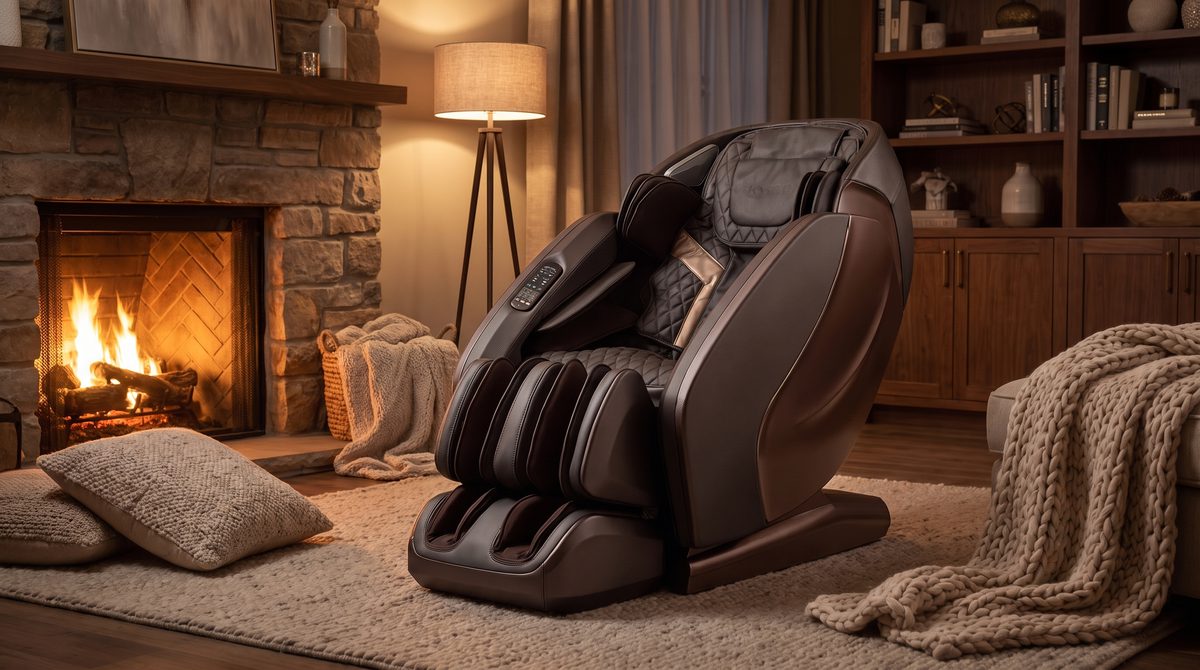
Auto programs, the everyday workhorse
Alongside the scan and any AI features, every quality chair ships with a set of auto programs, which are preset routines with names like relax, deep tissue, stretch, or recovery. Each one is a choreographed sequence of roller motions, airbag compression, and recline.
These are what most people actually use day to day. Once the scan has fitted the roller path to your body, an auto program lets you press one button and get a coherent, well-paced session without fiddling with manual controls. The better the chair, the more natural these sequences feel, flowing from warm-up to focus to cooldown rather than lurching between moves.
- Relax or comfort programs for winding down before bed
- Deep tissue or sport programs for working out tension
- Stretch programs that use airbags and recline to gently decompress
- Targeted modes that concentrate on the neck, lower back, or feet
Manual mode still matters for zeroing in on one spot, but for daily use the quality and range of the auto programs is what you will live with.
Voice control and app control
Two convenience layers show up on smarter chairs, and both are more useful than they first appear.
Voice control
Voice lets you start a program, raise or lower intensity, or recline without reaching for the remote. That sounds minor until you are already reclined into zero gravity with a roller working your back and you would rather not move. Speaking a command to nudge the pressure up keeps you in the massage instead of pulling you out of it. Availability and the exact command set vary by model, so confirm what a specific chair supports.
App control
A companion app typically mirrors the remote on your phone and often adds a little more. Depending on the chair, an app can let you browse and start programs, save custom routines, track how often you use the chair, and receive firmware updates that add or refine features over time. That last point is worth noting. A chair that updates can quietly get better after you buy it.
Neither voice nor app should be the reason you choose a chair, but they meaningfully improve the daily experience on top of a strong massage. Weigh them the way you would any other feature in our features that actually matter guide, as a bonus rather than the headline.
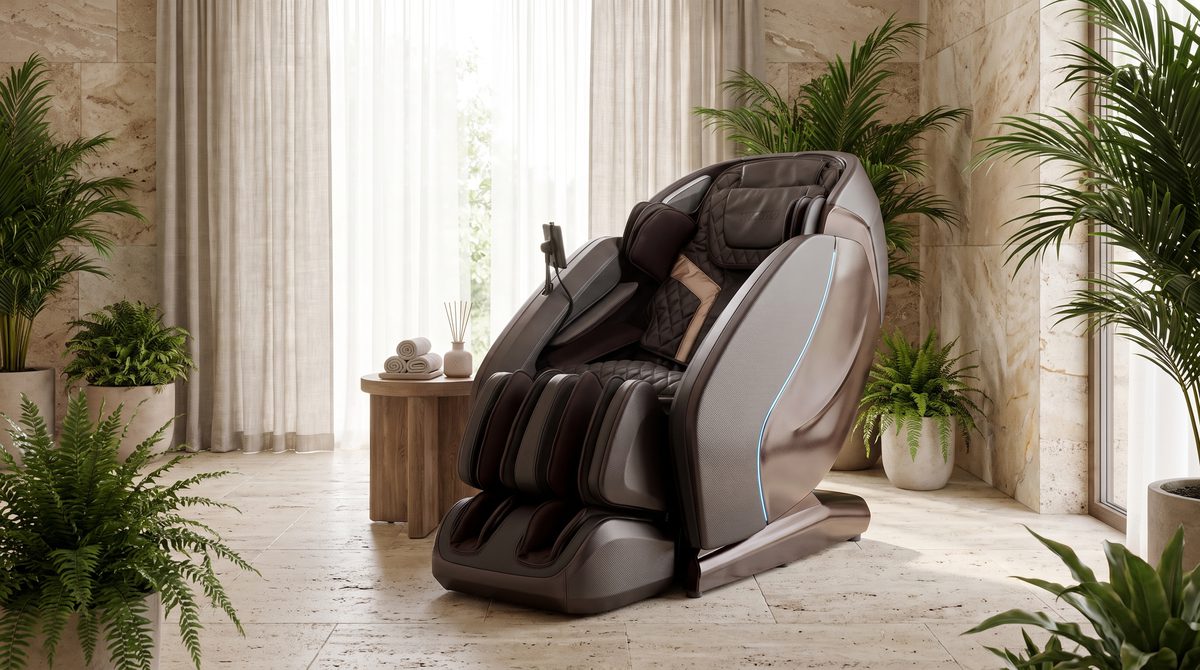
Do you need all of this?
Honestly, no one needs every smart feature, and paying for them makes sense only if you will use them. A reliable body scan is the one worth insisting on, because it affects every session and cannot be added later. Rich AI adaptation, voice, and app control are genuine quality-of-life upgrades that shine for people who use their chair daily and like to tune things.
If you are early in your search, it helps to place these features inside the bigger picture. Our buying guide covers how to weigh smart features against fit, track, and budget. Smart features tend to cluster in the upper price bands, so set your expectations accordingly before you shop.
Frequently Asked Questions
What is a massage chair body scan and why does it matter?
It is an automatic measurement pass the rollers make when you first sit down, mapping your shoulders, spine, and back length. It matters because it aims the massage at your actual body, so shoulder work lands on your shoulders and spine strokes stay beside the bone rather than on it. Without it, everyone gets the same roller positions regardless of height or build.
Is the AI in a massage chair real intelligence?
It is adaptive software, not a thinking machine. In practice, an AI massage chair adjusts roller placement from your body scan, responds to your feedback during a session, and sometimes remembers your preferences. That is genuinely useful, but it works best when you also steer it toward the spots you care about.
Can I adjust the massage if the body scan gets it wrong?
On most quality chairs, yes. You can usually nudge the shoulder position and pressure after the automatic scan, which helps if you have a less common build. Higher-end models make this fine-tuning easier and remember your changes.
Do I need voice or app control?
They are convenient, not essential. Voice lets you change settings without reaching for the remote while reclined, and an app can save routines and deliver updates. Choose your chair on the strength of the massage first, then treat voice and app control as welcome extras.
The bottom line
The smartest thing a smart chair does is get to know your body before it touches it. A solid body scan is the feature that quietly shapes every session, while AI programs, voice, and app control layer on convenience and personalization for daily users. If a chair that adapts to you sounds worth it, explore the full collection and look closely at how each model handles the body scan and its auto programs.
The chair featured in this article
Kyota Hatsumei M900 AI 4D Massage Chair
View this chair →