How to Choose a Massage Chair, The Complete 2026 Buyer's Guide
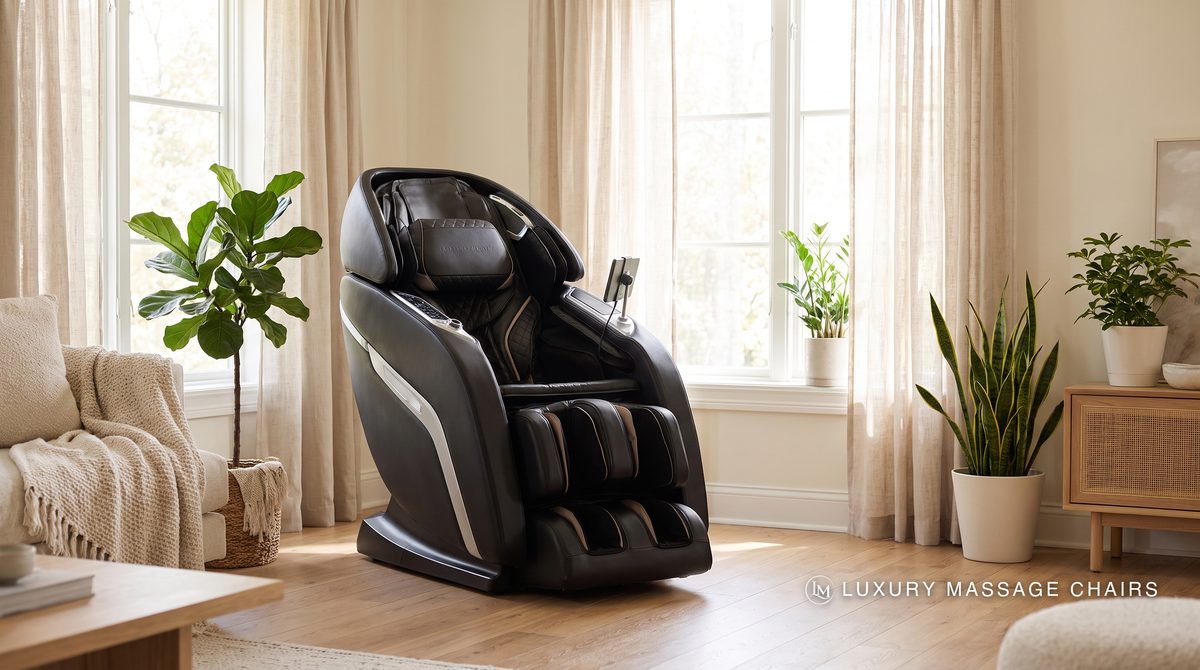
A massage chair is one of the few purchases you will use almost every day for years, and that changes how you should shop for it. Learning how to choose a massage chair is not about chasing the longest spec sheet. It is about matching the right chair to your body, your room, and the way you actually plan to use it.
This massage chair buyers guide walks through everything that matters, in the order it matters. We cover how a chair fits your frame, the roller technology that defines the massage, the comfort features worth paying for, and the practical details people forget until it is too late, like recline clearance, warranty, and delivery. By the end you will be able to read any product page and know exactly what you are looking at.
Take your time with it. The most common regret we hear is not that someone spent too much. It is that they wish they had matched the chair to themselves instead of buying the one with the most buttons.
Start with fit, your body is the first spec
Before track shape or roller depth, a chair has to fit your body. A world-class massage aimed six inches off your spine is just an expensive shove.
Two measurements drive fit. The first is height. Most chairs quote a recommended user-height range, and the reason is the roller track, the path the rollers travel up and down your back. If you are very tall or very petite, that range matters more than any other number on the page. Many premium chairs now include a body scan that maps your spine and adjusts roller position automatically, which widens the range a single chair can serve. Our AI body scan explainer covers how that works.
The second is body type and shoulder width. Broader users want a roomier seat and wider shoulder airbags. Smaller users want rollers that can reach in without feeling swallowed by the frame. If two people of very different sizes will share the chair, favor models with strong auto-detection and adjustable intensity so it can adapt between users.
- Very tall, around 6 feet 2 inches and up, so confirm the quoted height range and look for extendable footrests
- Petite, under about 5 feet 2 inches, so prioritize accurate body scanning that keeps the rollers from riding too high
- Two very different users, so favor adjustable width and per-user intensity
Understand the track, S-track versus L-track
The track is the rail the rollers follow along your back, and its shape decides how much of your body gets touched.
An S-track curves with the natural S of your spine, from neck to lower back. An L-track extends that path further, continuing under the seat to reach the glutes and hamstrings. For most buyers, and especially anyone with lower-back or hip tension, that longer L-track coverage is the single most noticeable upgrade in the whole category.
We break it down fully in L-track versus S-track massage chairs, and the short version is simple. If your tension lives below the belt line, an L-track earns its keep. Nearly every luxury flagship today uses one.
Decode the roller, 2D, 3D, and 4D
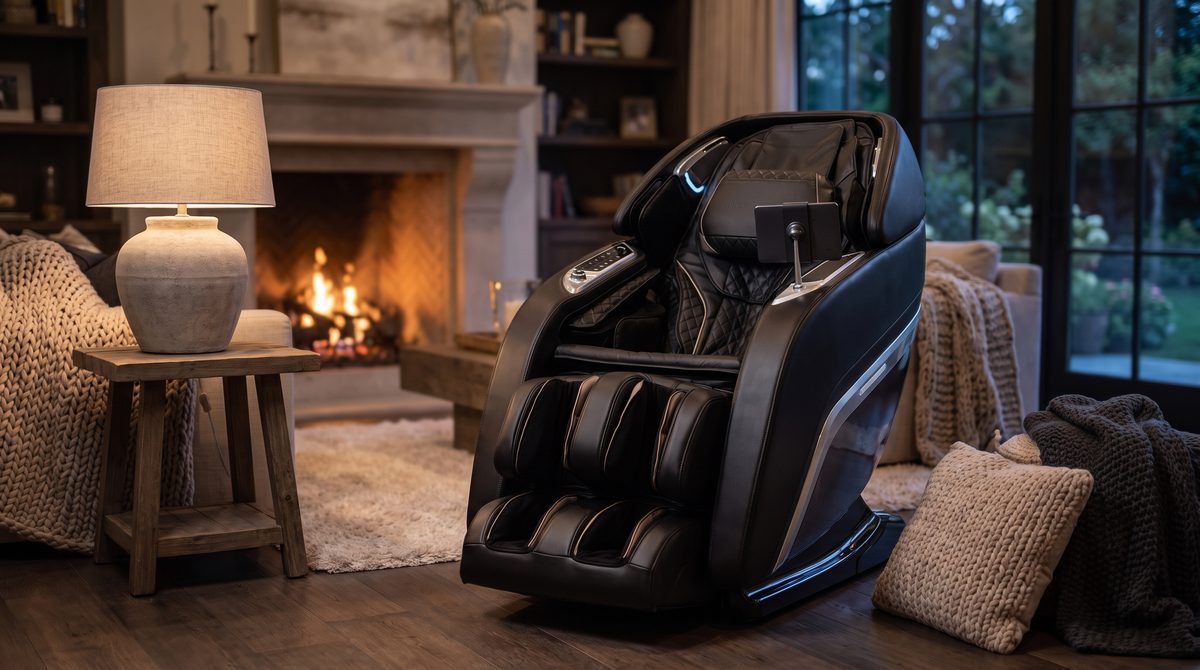
This is where the marketing gets loudest, so let us make it simple. The number describes how many directions the rollers can move.
- 2D rollers move up and down and side to side, a flat plane of motion
- 3D rollers add depth, pushing out from the track to vary pressure and reach deeper muscle
- 4D adds rhythm and variable speed on top of 3D, so strokes feel more like human hands
3D is the meaningful jump for most people. It is the difference between a massage that sits on your back and one that presses into it. 4D refines that further with a more lifelike, kneading cadence. Our 2D, 3D, and 4D explainer goes deep if you want to compare feel and value. If your budget stretches to it, a 4D flagship gives the most nuanced pressure, while a strong value 4D chair brings most of that experience for less.
Zero gravity, heat, and air compression
Beyond the rollers, three features do the most to shape how a session actually feels.
Zero gravity reclines you into a posture that lifts your knees toward heart level and shifts weight off your lower spine. It is not a gimmick. When the frame carries your weight, the rollers sink deeper for the same pressure and your muscles stop bracing. The best chairs offer two or three staged zero-gravity angles. Our zero gravity explainer covers why it works.
Heat loosens tight tissue and simply feels good, most often applied to the lumbar area, sometimes the calves and feet. It is a comfort multiplier rather than a headline feature, but you will miss it if it is absent.
Air compression uses airbags that inflate around your shoulders, arms, hips, calves, and feet to squeeze and release. Good air massage is one of the most relaxing parts of a modern chair, and coverage varies a lot between models. If you carry tension in your legs or shoulders, weigh airbag count and placement seriously.
Foot rollers and the lower body
Do not overlook the bottom of the chair. Foot rollers press into the soles of your feet, and calf airbags knead the lower legs, an area that takes a beating if you are on your feet all day or training hard. Many people end up using foot and calf work more than the back massage.
If lower-body recovery is your priority, look for adjustable calf intensity and a footrest that extends to fit your height. Athletes in particular tend to prioritize this, which we cover in massage chairs for athletic recovery.
Space, measure before you fall in love
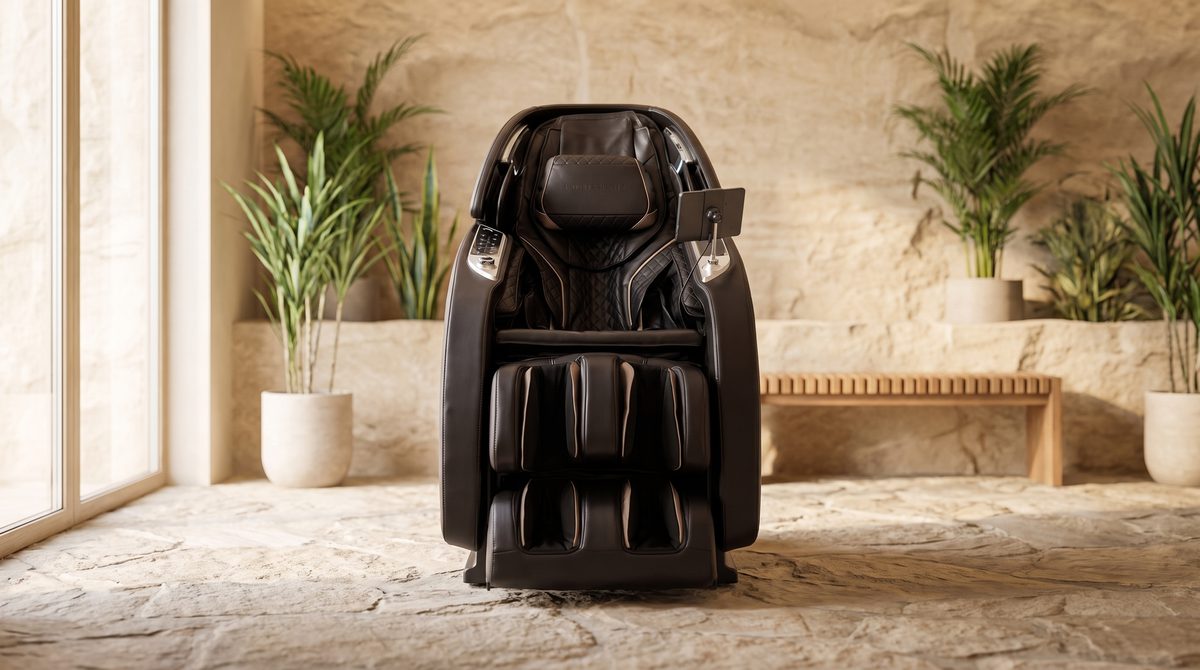
The most avoidable mistake is buying a chair that will not fit your room. Massage chairs need clearance to recline, and a full recline can push the seat back well beyond its upright footprint.
Two things save you here. First, measure the wall behind and the space in front before you shop. Second, look for a zero-wall or wall-hugging design, which slides the seat forward as it reclines so it can sit just inches from the wall. If space is tight, a compact or wall-hugging model is worth prioritizing, and our small-space guide has the full checklist.
- Measure the upright footprint and the full-recline depth
- Add clearance for the footrest to extend
- Prefer zero-wall designs in apartments and tight rooms
Budget and price tiers
Massage chairs span a wide range, roughly from around $1,599 for a capable compact model up to about $16,999 for a luxury flagship. The massage chair price you pay mostly tracks roller sophistication, track length, build quality, and the depth of features like body scanning and multi-stage zero gravity.
You do not have to spend at the top to get a genuinely great chair. Entry and value models handle the fundamentals well, while mid and premium price tiers add 4D nuance, longer tracks, and smarter automation. To see exactly what appears at each level, walk through our massage chair price guide. If you are still weighing the decision itself, are massage chairs worth it lays out the honest cost-per-use math against professional massage. And when you want the shortlist by category, our best massage chairs 2026 ranking sorts them by use case.
One more angle worth checking. Some buyers with a qualifying condition explore paying with pre-tax health dollars, and we cover the general rules in HSA and FSA for a massage chair.
Warranty, delivery, and US-based support
A massage chair is a machine with motors, rollers, and airbags, so the warranty is part of the product, not an afterthought. Read what is covered, meaning parts, labor, and structure, and for how long. Premium chairs generally carry longer, more comprehensive coverage, which tells you something about how the maker expects them to hold up. It is also worth confirming you have US-based support and service, since a chair this size is not something you want to ship overseas for a repair.
Delivery and setup vary too. Some chairs arrive freight in a heavy box you assemble yourself. Others include white-glove delivery, where a team brings it inside, assembles it, and hauls away the packaging. If the chair is large or your space is hard to navigate, white-glove is worth a lot.
Finally, think about the extras you will live with daily, like how intuitive the remote is, whether there are useful auto-programs, app control, and the general build feel. For a fuller tour of every feature and what actually matters, see our massage chair features guide. If you are cross-shopping two models, our guide on how to compare massage chairs helps you line them up fairly.
Frequently Asked Questions
What is the most important factor when choosing a massage chair?
Fit comes first. A chair has to match your height and body type, or the rollers land in the wrong place and no amount of technology fixes it. After fit, prioritize track shape, meaning an L-track for broader coverage, and roller type, meaning 3D or 4D for real depth. Features like heat and air are comfort multipliers on top of that foundation.
Is a 4D massage chair worth it over 3D?
For many buyers, 3D is the meaningful jump because it adds depth. 4D refines the experience further with variable rhythm and speed that feels more like human hands, which is why it defines luxury flagship chairs. If you want the most lifelike, nuanced massage and your budget allows it, 4D is worth it. If you are value-focused, a strong 3D or value 4D chair delivers most of the benefit for less.
How much space do I need for a massage chair?
Enough for the chair to fully recline, which is more than its upright footprint. Measure the depth behind and in front before buying. A zero-wall or wall-hugging design slides forward as it reclines and can sit just inches from a wall, which makes it the smart choice for apartments and tight rooms.
How long do massage chairs last?
A well-built chair from a reputable brand is designed to last many years of regular use, which is why warranty length and coverage matter so much. Premium models tend to carry longer warranties because they are engineered for durability. Treat the warranty, along with US-based support, as a signal of expected lifespan rather than just insurance.
Can I try a massage chair before buying?
When you can, yes, since sitting in a chair tells you things a spec sheet cannot. If in-person testing is not practical, lean on fit ranges, body-scan capability, and detailed feature guides, and buy from a retailer with clear delivery, warranty, and support terms so you are covered.
Ready to find your chair
The best massage chair is the one that fits your body, your room, and the way you will actually use it, not the one with the longest feature list. Start with fit, choose your track and roller, then layer on the comfort features that match how you carry tension. When you are ready, browse the collection or start with our 2026 rankings to see the standouts by category.
The chair featured in this article
Luminary Syner-D Massage Chair
View this chair →