Where to Put a Massage Chair in Your Home
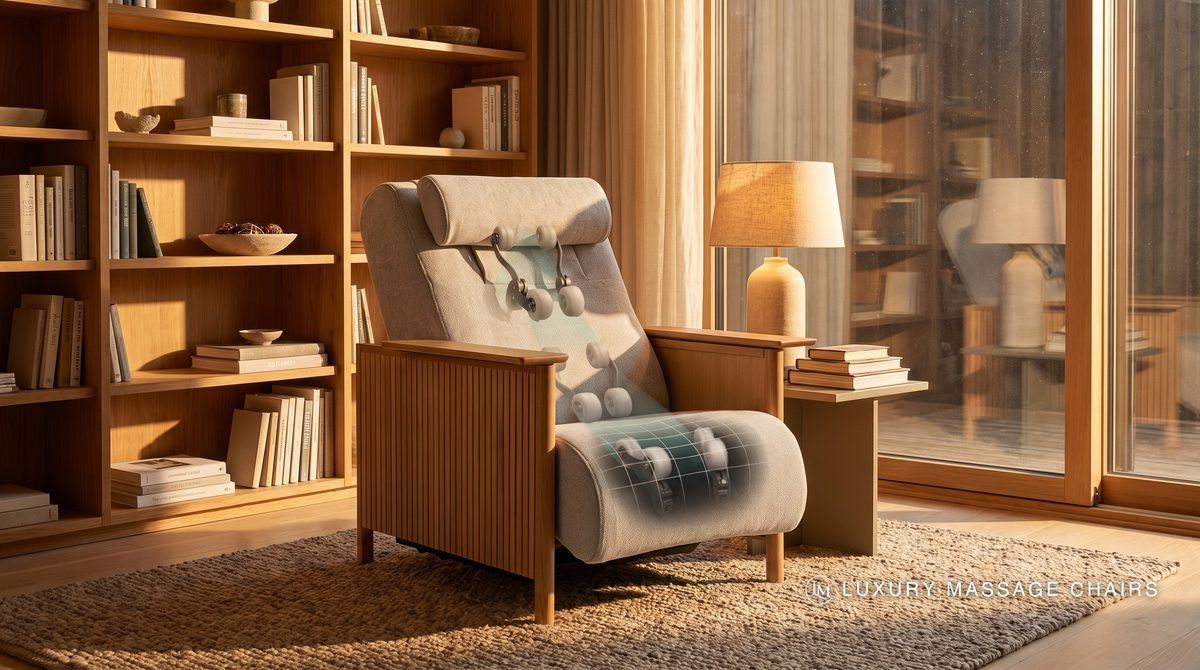
A massage chair only helps if you actually sit in it, and where it lives has a lot to do with whether you do. Deciding where to put a massage chair is not just an interior design question. It affects how often you reach for it, how well it reclines, and whether it feels like a welcome part of your home or an awkward piece of furniture you tucked in a corner.
The best spot balances a few practical needs against the simple truth that convenience drives habit. A chair you pass every evening gets used. A chair banished to a distant room you rarely enter slowly becomes expensive decoration.
This guide walks through the rooms that tend to work, the clearances the chair needs, and the small details like outlets, flooring, and light that make a spot great rather than merely okay. If your home is short on space, do not worry, we will cover tight rooms too, and you can go deeper in our guide to chairs for small spaces.
Start with how you will actually use it
Before measuring anything, think about when and why you will sit down. Your intended use points you toward the right room more reliably than square footage does.
If the chair is for unwinding in the evening, near where you already relax makes sense so it becomes part of the routine. If it is for a morning wake up or a midday reset while you work from home, a spot near your office or bedroom serves better. The principle is simple. Put the chair on the path you already walk, and using it stops requiring a decision. Recovery you pass by is recovery you use, an idea that also shapes our guidance on how to choose a massage chair.
Rooms that tend to work well
A few rooms come up again and again for good reason. Each brings a different flavor of use, so match the room to your goal.
- The living room, the most common choice, keeps the chair in daily view and turns downtime into recovery time
- A home office, great for people who work long hours and want to reset between tasks without leaving the room
- The primary bedroom, ideal if you use the chair to wind down before sleep, which pairs naturally with our look at chairs and sleep
- A den, media room, or finished basement, a relaxed setting where a larger chair blends in easily
- A dedicated wellness or spare room, wonderful if you have the space to give the chair a calm corner of its own
There is no single right answer. A chair in the living room gets used casually and often. A chair in a quiet dedicated room offers a more deliberate, spa like ritual. Choose the room that fits the habit you actually want to build.
Give it enough clearance
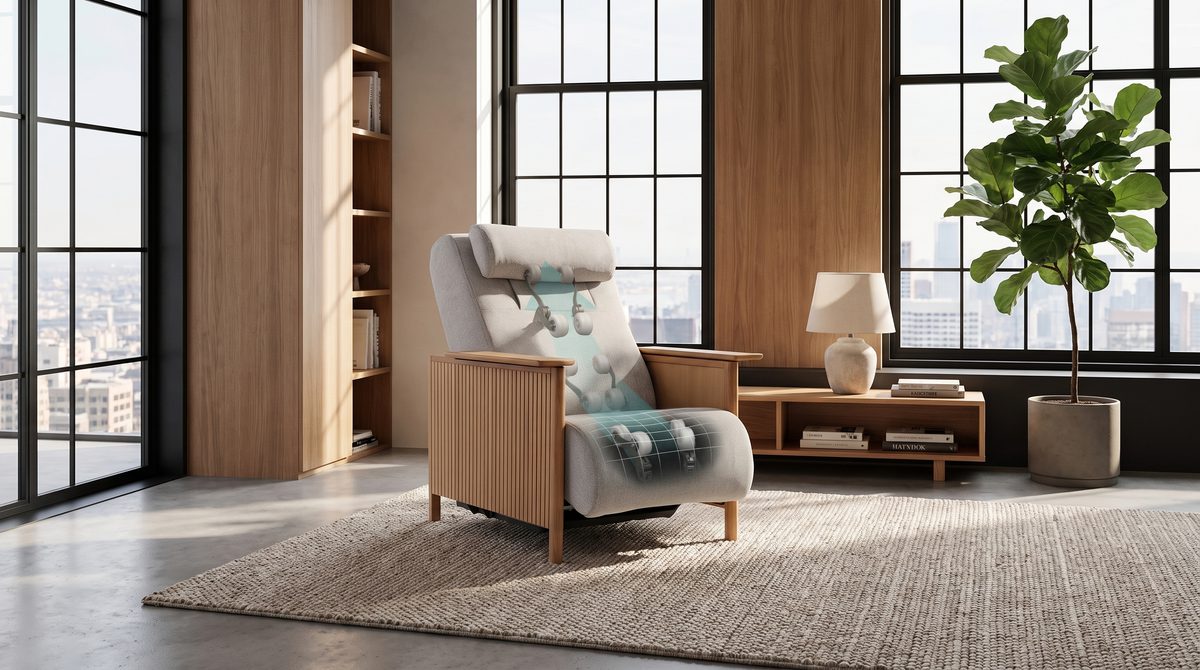
This is the detail that trips people up most, so measure carefully. A massage chair needs more room than its upright footprint suggests, because it moves as it works.
Many chairs slide or recline in ways that require space behind them, and the footrest extends forward as it lifts your legs. Before you commit to a spot, check both the reclined dimensions and how much clearance the chair needs at the back and front. A chair jammed against a wall may not be able to fully recline, which robs you of the best part of the experience. Leave room around it so it can move freely and so you can walk past without turning sideways.
- Confirm the fully reclined length, not just the upright footprint
- Leave the rear clearance the chair requires to recline properly
- Allow room in front for the footrest to extend
- Keep a comfortable walking path around the chair
If clearance is tight, the next section is for you, because the right chair design can solve most of the problem.
Wall hugging designs for tight spaces
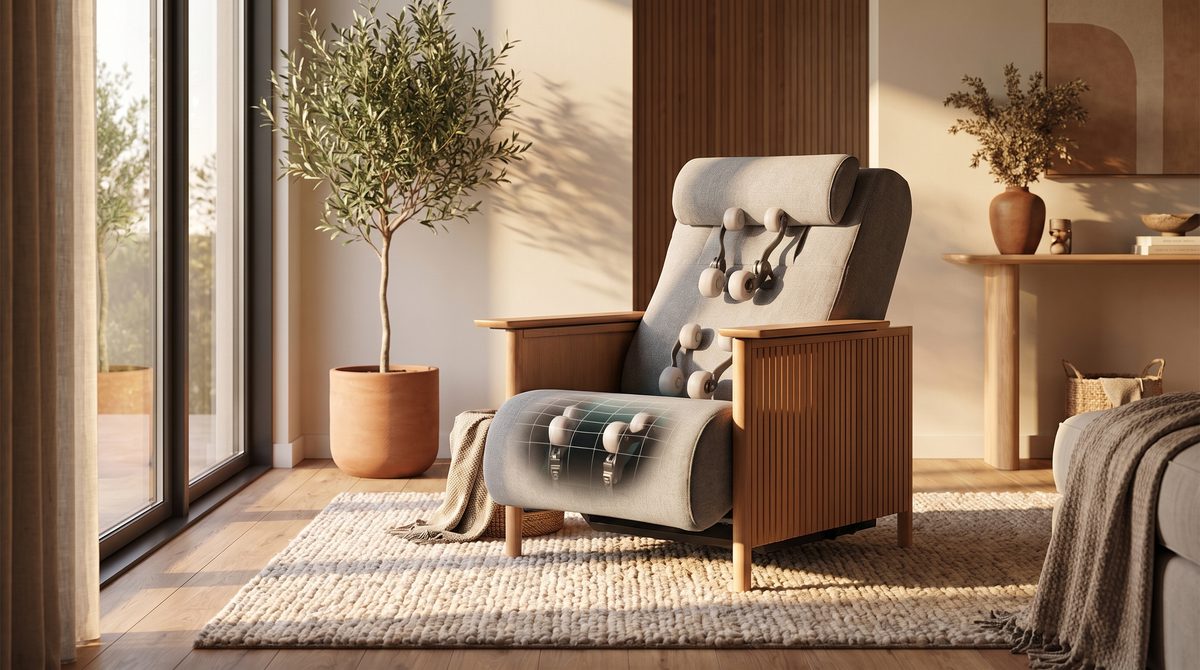
Not every home has feet to spare behind a chair, and that is exactly what wall saving designs are built for. Instead of reclining backward into the room, these chairs glide forward as they lean, so they need only a few inches of rear clearance.
For apartments, small living rooms, or any spot where you want the chair close to a wall, this feature changes what is possible. It lets a full size chair live comfortably in a space that could never accommodate a traditional reclining footprint. When you are shopping, ask specifically how much rear clearance a chair needs, since a wall hugging design can be the single detail that makes your preferred spot work. Our guide to chairs for small spaces digs into the layouts that make the most of a snug room.
Mind the outlets
A massage chair needs power, and where the outlets are can quietly override where you wanted the chair to go. Sort this out before you place anything.
Plan for the chair to sit near a grounded outlet so the cord reaches without stretching across a walkway. Running a cord over open floor is both a trip hazard and an eyesore, and heavy duty extension cords are best avoided for a device that draws real power. If your ideal spot has no nearby outlet, factor that into the decision or plan the placement around the power you do have. A tidy, safe power setup is part of a spot that works long term.
Flooring and protecting your floors
What sits under the chair matters more than people expect, both for the chair and for your floors. A massage chair is heavy, and it concentrates that weight on small feet.
On hard floors like wood, tile, or laminate, the chair can press marks into the surface over time, and it may shift slightly as it operates. A mat or protective pad under the chair spreads the load and guards the finish. On carpet, make sure the surface is firm enough that the chair sits stable and does not rock. Either way, plan for a level, solid footing so the chair stays put and your floors stay unmarked.
- Use a protective mat on wood, tile, or laminate to prevent marks
- Confirm carpet is firm enough for a stable, level base
- Choose a level spot so the chair does not rock during use
- Remember the chair is heavy, so pick a final spot you will not want to move often
Since these chairs are difficult to relocate once placed, this is a decision worth getting right the first time, which is also why we cover it in our warranty and delivery guide, where improper moving can even affect coverage.
Light and atmosphere
The final layer is the one that turns a functional spot into a place you genuinely want to be. Light and surroundings shape the mood of every session.
Soft, adjustable lighting suits a chair used for relaxation far better than harsh overhead glare. A spot near a window can be lovely for a daytime session, while a dimmable lamp makes evening use feel like a real wind down. Facing the chair toward a pleasant view, a fireplace, or simply away from clutter helps the mind settle. None of this is required for the chair to work, but the right atmosphere makes you reach for it more often, and consistent use is where the real value lives.
Frequently Asked Questions
Where is the best place to put a massage chair?
The best spot is one you pass often and one with enough clearance for the chair to fully recline. The living room is the most popular choice because it keeps the chair in daily view, but a home office or bedroom can be better depending on when you plan to use it. Convenience is what drives regular use, so favor a room you already spend time in.
How much space does a massage chair need?
More than its upright footprint suggests, because it moves as it works. Check the fully reclined length and the clearance the chair needs behind and in front for reclining and the extending footrest. Traditional chairs may need a foot or more of rear clearance, while wall hugging designs need only a few inches, which matters a lot in tight rooms.
Can a massage chair sit against a wall?
Only if it is designed to. A wall hugging chair glides forward as it reclines, so it can sit just a few inches from a wall, while a traditional chair reclines backward and needs real space behind it. If your ideal spot is against a wall, ask specifically how much rear clearance a chair requires before you buy.
Will a massage chair damage my floors?
It can over time, since the chair is heavy and concentrates weight on small feet, so protect hard floors with a mat or pad. On wood, tile, or laminate this prevents marks and guards the finish. On carpet, make sure the surface is firm enough for the chair to sit stable and level so it does not rock during use.
Does a massage chair need a special outlet?
Not a special one, but it does need a nearby grounded outlet so the cord reaches without stretching across a walkway. Avoid running cords over open floor or relying on light duty extension cords for a device that draws real power. If your preferred spot has no outlet close by, plan the placement around the power you have.
Set the stage for daily relief
The right spot is the one that invites you to sit down without thinking, with room to recline, safe power, protected floors, and a calm atmosphere around it. Get the placement right and the chair stops being furniture and becomes a habit. When you are ready to find the chair that fits your room, explore the collection.
The chair featured in this article
The Restora Chair
View this chair →