Massage Chair vs a Massage Therapist, Which Is Right for You
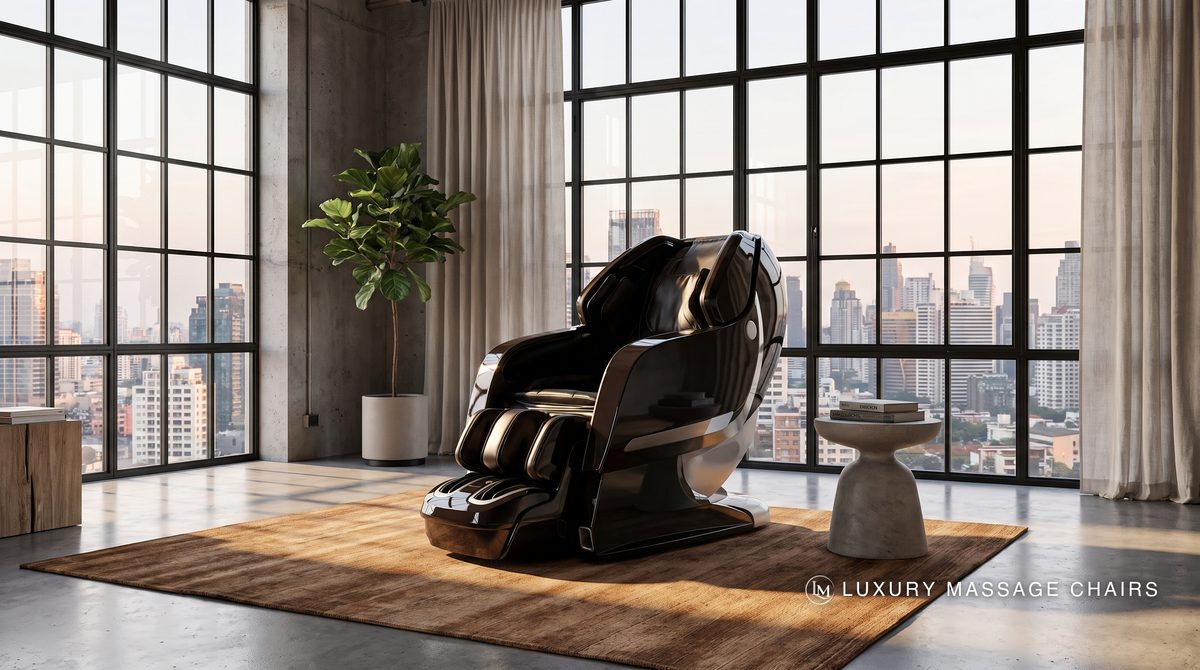
The massage chair vs massage therapist question sounds like a contest, but it is really a question about your week. How often do you want relief, how much can you spend over a few years, and how much do you value a real pair of hands reading your body in the moment. Both options are good. They are simply good at different things.
A skilled therapist brings judgment, warmth, and the ability to find the exact knot you did not know you had. A high quality chair brings something a therapist cannot, and that is availability. It sits in your living room and works at ten at night or six in the morning without an appointment. Most people who love their chair are not rejecting bodywork. They are adding a tool that fills the gaps between sessions.
This guide walks through the honest trade offs so you can pick with your eyes open. If you are still deciding whether the category makes sense at all, our take on whether massage chairs are worth it is a good companion read.
The cost picture over time
The clearest difference shows up in money, and it flips depending on how far out you look.
A single therapist session in most US cities runs a meaningful amount once you add a tip, and if you go weekly that number stacks fast across a year. A premium chair is a large one time purchase, sometimes with financing spread over months, and after that the cost per use only falls the more you sit in it.
Think in cost per use rather than sticker price. A therapist costs the same every visit forever. A chair costs a lot the first day and almost nothing the thousandth day. Someone who uses a chair four times a week for several years often lands at a cost per session that a weekly appointment cannot match. Someone who would use it twice a month may never reach that break even point, and for them the math points the other way.
- Occasional relief, a few times a month, favors booking a therapist
- Frequent use, several sessions a week, favors owning a chair
- Shared households push the chair math further, since one purchase serves everyone
If you want to see how the numbers move across price tiers, our massage chair price guide lays out what different budgets actually buy.
Convenience and on demand access
This is where a chair quietly wins for a lot of buyers. There is no drive, no parking, no booking two weeks out, and no rescheduling when work runs long. You feel tight, you sit down, you get relief in fifteen minutes, and you go back to your evening.
That immediacy changes behavior. Recovery you can reach in ten seconds is recovery you will actually use. A great therapist you can only see every third Thursday helps on that Thursday. The rest of the month you are on your own.
Access also matters for consistency. Muscle tension responds to regular attention more than to occasional deep intervention. A chair makes daily, low effort maintenance realistic in a way that repeat appointments rarely are. If you train or work long hours, that steady drumbeat is often more useful than one intense session, which is why so many active people fold a chair into their athlete recovery routine.

Human touch versus consistency
Here is the part no chair fully replaces. A therapist adapts in real time. They feel where you guard, ease off a tender spot, lean into a stubborn one, and read a hundred small signals from your breathing and your skin. There is also a human, calming quality to being cared for by another person that a machine does not reproduce.
A chair trades that adaptability for consistency. It delivers the same well engineered program every single time, at the same pressure, without an off day, a rushed schedule, or a therapist who is not quite the right fit. For some people, predictable and repeatable beats brilliant but occasional.
Modern chairs have narrowed the gap more than skeptics expect. Body scanning maps your shoulders and spine so rollers land closer to the right places, and multi dimensional roller systems can knead in ways that feel surprisingly lifelike. It is still a program, not a person, but it is a very good program, and multi dimensional roller technology keeps closing the distance every year.
What a chair does especially well
- Daily, unglamorous maintenance that keeps tension from building up
- Late night and early morning relief on your own schedule
- Full body coverage from neck to calves in one sitting
- Warmth and compression that help you wind down before sleep
What a therapist does especially well
- Finding and working a specific injury or chronic problem area
- Adjusting technique the moment your body reacts
- Hands on assessment that can flag something worth checking further
- The human connection of being cared for by a skilled person
When each option clearly wins
Some situations point cleanly one way.
Choose a therapist first when you have an acute injury, a chronic pain issue, or a specific rehab need. A trained professional should guide that work, and a chair is a poor substitute for hands that can assess. For persistent, severe, or worsening symptoms, see a clinician before leaning on any device for relief. A chair is for comfort and everyday recovery, not diagnosis or treatment.
Choose a chair when your goal is frequent, convenient, whole body maintenance and you are tired of the cost and logistics of regular appointments. If tight shoulders, a stiff lower back, and general stress are your daily companions, an at home option you will actually use every day tends to earn its place. Many buyers with ongoing tension find a chair helps them manage the day to day between the sessions that matter most, and our piece on daily use benefits covers what regular sessions tend to feel like over weeks.
For a lot of people the honest answer is not either or. It is a chair for the frequent, everyday relief and a therapist now and then for the deeper, hands on work. The chair handles volume, the therapist handles precision, and together they cover more than either could alone.
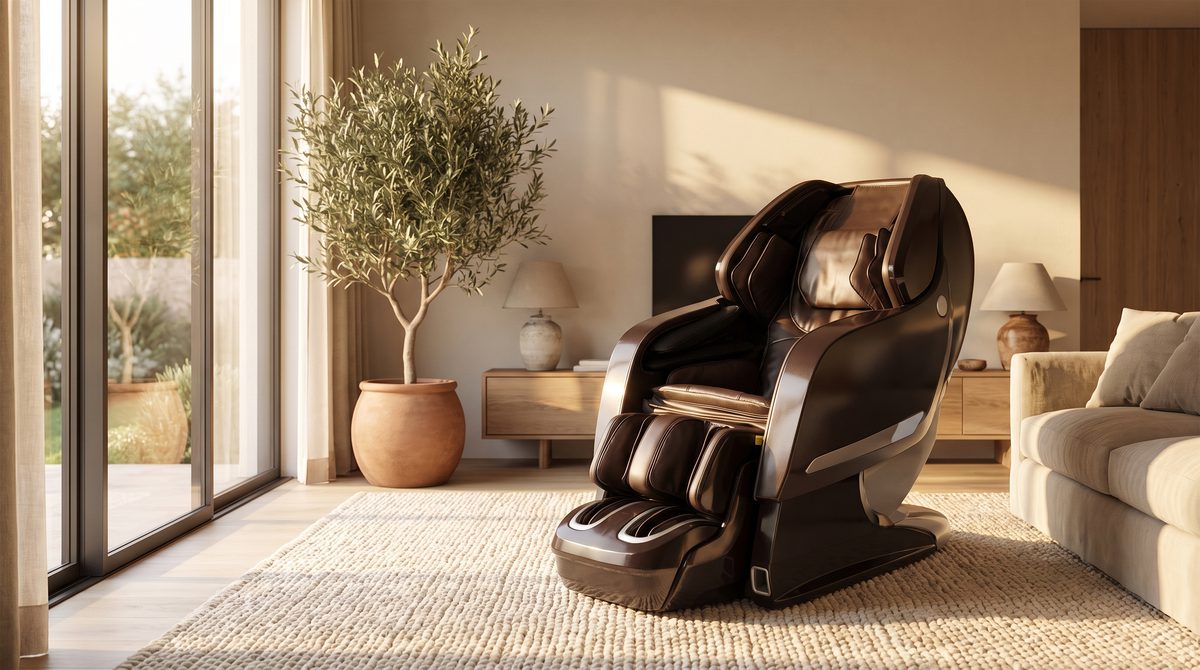
How to decide for your situation
Run your own life through a few simple questions before you spend anything.
- How many sessions a month do you genuinely want, not the number you imagine
- What does that add up to in a year of therapist visits versus one chair purchase
- Do you have a specific injury that needs a professional first
- Will other people in your home use the chair too
- Is your bigger barrier cost, or is it time and scheduling
If time and frequency are your obstacles, a chair removes them. If your needs are occasional or clinical, hands win. Being honest about your real habits matters more than any spec sheet, and it is the same clear eyed thinking behind our guide on how to choose a massage chair.
Frequently Asked Questions
Can a massage chair replace a massage therapist?
For everyday tension, stiffness, and stress relief, a good chair covers a lot of what people see a therapist for, and it does so far more often. It does not replace hands on assessment or treatment for an injury or a chronic condition. Think of it as a complement that handles the frequent, routine work while a professional handles the specific and the serious.
Is a massage chair cheaper than a massage therapist over time?
It depends entirely on how often you use it. A chair is a big cost up front and a tiny cost per use afterward, so heavy, regular users often come out ahead within a couple of years. Someone who would only use it occasionally may never reach that break even point, and regular appointments make more sense for them.
Does a massage chair feel like real hands?
Not exactly, and it is fair to set that expectation. What a chair offers instead is consistency, delivering the same well designed program every time without an off day. Advanced roller systems and body scanning have made the experience far more lifelike than older chairs, though a person still adapts in ways a machine cannot.
Should I see a therapist or buy a chair for back pain?
Start with a professional if the pain is significant, persistent, or tied to an injury, since assessment should come first. A chair can be a helpful part of ongoing, everyday maintenance once you understand what you are dealing with. For pain that lingers or gets worse, see a clinician rather than self treating with any device.
Can I use both a chair and a therapist together?
Yes, and many people find this is the best of both worlds. The chair gives you frequent, low cost relief at home, while occasional professional sessions handle the deeper, targeted work. Used together they cover more ground than either option on its own.
Find the chair that fits your life
The best choice is the one that matches how you actually live and how often you want relief. If frequent, convenient, whole body recovery is what you are after, a well built chair earns its keep quickly. Explore the collection to see how the right fit can turn everyday tension into a fifteen minute habit you look forward to.
The chair featured in this article
Kyota Yosei M868 4D Massage Chair (Limited Availability)
View this chair →