Are Massage Chairs Worth It? An Honest Cost-Benefit Breakdown
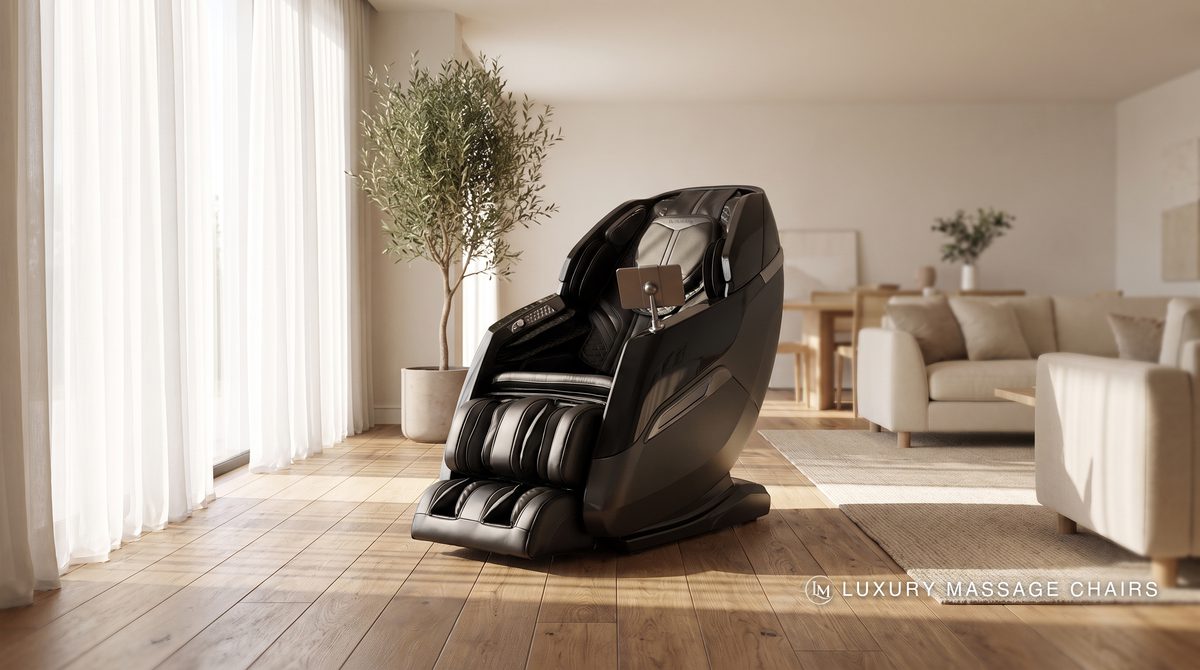
Let us answer the real question honestly. Are massage chairs worth it? For the right person, absolutely. For the wrong person, it is an expensive piece of furniture that becomes a coat rack by spring. The trick is figuring out which one you are before you spend the money.
A good massage chair costs somewhere between a nice sofa and a used car. That is real money, and no one should hand it over on the basis of a showroom demo and a good mood. So this article does something most retailer blogs will not. It makes the honest case both for and against, runs the cost-per-use math, and helps you decide clearly.
We sell these chairs. We would still rather you skip one than buy one you will not use.
The cost-per-use math works in your favor
The sticker price is scary because you see it all at once. But a massage chair is not a one-time experience. It is a fixed cost spread across thousands of sessions.
Think about it this way. A single professional massage in most US cities costs a meaningful amount once you add the tip, and the relief lasts until the next time you tighten up. A massage chair is paid for once and then used freely. If you sit in it several times a week for years, the cost per use drops toward the price of a coffee, and eventually below it.
That is the core of the value argument. The chair does not have to beat a great therapist on any single session. It has to beat the cost of never getting one, because booking, driving, and paying every time is too much friction. Convenience is the feature people underrate most.
- A chair is a fixed cost divided across every session you take
- The more regularly you use it, the cheaper each session becomes
- There is zero booking and zero travel, and it is ready at 6 in the morning or 11 at night
Longevity, you are buying years, not months
Cost-per-use only holds up if the chair lasts, and this is where quality separates from bargain-bin gear. A well-built chair from a serious brand is engineered for many years of regular use, which is exactly why premium models carry longer, more comprehensive warranties and US-based support. The warranty is a signal. Makers back their chairs for as long as they expect them to run well.
This is also why we steer people away from the cheapest no-name chairs. A cheap chair that dies in eighteen months has a terrible cost-per-use, worse than a good chair that runs for a decade. If you are going to buy, buy something built to go the distance. Our massage chair price guide breaks down what build quality you actually get at each budget.
Who benefits most from a massage chair
Be honest with yourself about which group you are in. The people who get the most out of ownership tend to share a few traits.
- You already spend on massage. If you book regular professional sessions, a chair pays for itself and then keeps going for free.
- You carry chronic tension. Desk workers, drivers, and anyone with a stiff lower back or musculoskeletal pain get daily relief on demand. If that is you, our massage chair for back pain guide is worth a read, and see a clinician for any persistent or serious pain.
- You train hard. Athletes and weekend warriors use chairs for recovery between training sessions, which we cover in massage chairs for athletic recovery.
- You struggle to wind down. A gentle evening session helps many people relax tight muscles and ease toward sleep.
- You value convenience highly. If friction is the reason you do not get massages, removing it entirely is the whole point.
If two or three of those describe you, the odds tilt strongly toward a yes.
Who should probably not buy one
Now the other side, because a balanced answer needs it.
If you would be stretching your finances to afford the chair, skip it. This is a comfort purchase, not a necessity, and going into debt for it is a bad trade. If you are the type who buys exercise equipment enthusiastically and abandons it in a month, be skeptical of your own excitement, because a chair only earns its price through repeated use. If your space genuinely cannot accommodate one, forcing it leads to resentment, though a compact model can sometimes solve this.
And if you have a specific medical condition, an injury, pregnancy, a recent surgery, or a cardiovascular or blood-pressure issue, do not buy a chair to treat it. Talk to your clinician first. A massage chair is a wellness and comfort product, not a medical device, and it should never replace real care.
The hidden costs people forget
An honest breakdown has to include the costs beyond the sticker price, because they are real even if they are small.
There is electricity, though a massage chair sips power and the annual cost is negligible next to what you paid for it. There is space, since a chair occupies real square footage and needs clearance to recline, so if your room is tight you will want a compact or wall-hugging model rather than forcing a big one. And there is the occasional upkeep, like wiping down the upholstery and keeping the mechanism clear, the ordinary care any well-used machine needs. A light routine keeps a chair running for years. None of it is burdensome, but pretending these costs are zero would be dishonest.
The bigger hidden cost is the one nobody prices in, which is a chair you do not use. That is not a maintenance line item. It is the entire risk of the purchase. Everything in this article comes back to usage, because a chair that sits idle has an infinite cost per session.
The honest comparison, chair versus professional massage
People frame this as either-or, but it is really about what each one is good at.
A skilled human therapist adapts in real time, works specific problem areas, and delivers a quality of touch no machine fully replicates. For a deep-tissue problem or a periodic treat, nothing beats it. What a therapist cannot do is be available every single day at no marginal cost.
A chair is the opposite. It will not diagnose your knot or vary its plan based on how you wince, but it is there whenever you want it, forever, for free after purchase. The smartest owners we know do not fully replace one with the other. They use the chair for frequent maintenance and see a therapist occasionally for the deep work. The chair handles the routine so the specialist visit is a treat, not a necessity.
Making the decision with clear eyes
If you have read this far, you probably already lean one way. Here is how to confirm it.
Estimate how many sessions a week you would realistically take, being honest rather than aspirational. Multiply across a few years. Divide the chair's price by that number. If the per-session figure looks like a bargain against what you would otherwise pay, or against simply going without, you have your answer. Then match the chair to your body and room using our complete buyer's guide, and if you want the shortlist, our best massage chairs 2026 ranking sorts the standouts by use case.
One more practical note. If you have a qualifying medical condition, some buyers explore paying with pre-tax health dollars, which can change the math. We cover the general rules in HSA and FSA for a massage chair.
Frequently Asked Questions
Are massage chairs worth the money?
For regular users, yes. A quality chair spreads its cost across thousands of sessions, so the more you use it, the cheaper each session gets, often dropping below the price of a single professional massage within the first year of steady use. The value depends almost entirely on how often you will actually use it, so be honest about that before buying.
How does a massage chair compare to professional massage?
They are complementary. A human therapist offers adaptive, specific, deep-tissue work a machine cannot fully match, but only when you book and pay. A chair offers unlimited on-demand sessions at no marginal cost once purchased. Many owners use the chair for frequent maintenance and see a therapist occasionally for deeper work.
How long does it take for a massage chair to pay for itself?
It depends on how often you would otherwise pay for massage. If you already book regular professional sessions, a chair can offset its cost within a year or two of steady home use. If you rarely paid for massage before, the payoff is measured less in dollars saved and more in relief and convenience gained.
Who should not buy a massage chair?
Anyone stretching their finances to afford it, anyone with a history of buying equipment and not using it, and anyone hoping it will treat a medical condition. If you have an injury, are pregnant, or have a cardiovascular or blood-pressure condition, consult a clinician first, because a chair is a comfort product rather than a treatment.
Do massage chairs actually help with pain and stress?
Gentle massage can help many people relax tight muscles and unwind, and having it available daily removes the friction that stops most people from getting massage at all. Results vary by person, and a chair is not a cure for a medical problem. For persistent or serious pain, see a clinician rather than relying on any device.
The bottom line
A massage chair is worth it when you will use it, and a waste when you will not. Run the cost-per-use math honestly, be realistic about your habits, and match the chair to your needs. If the numbers and your lifestyle line up, browse the collection and choose one built to last. If they do not, we would rather you keep your money.
The chair featured in this article
Circadian 4D DualFlex Massage Chair
View this chair →