Massage Chair for Back Pain, What Helps and Why It Works
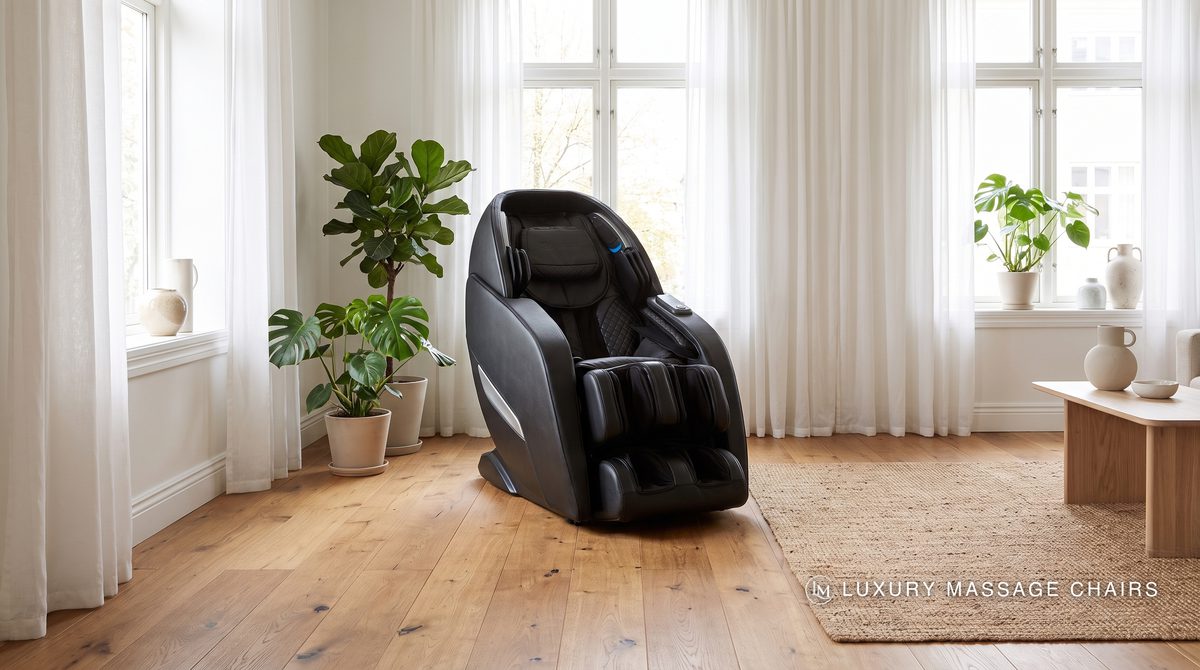
Most back complaints are not dramatic. They are the dull, familiar ache that shows up after a long drive, a heavy week of training, or eight hours hunched over a laptop. If that sounds like your back, a massage chair for back pain can be a genuinely useful tool at home, as long as you understand what it does well and where its limits are.
A good chair will not rebuild your spine. What it can do is loosen tight muscles, calm the nervous system, and give the soft tissue around your spine a reason to relax. So do massage chairs help back pain? For the everyday, muscle-driven kind, often yes, and for a lot of people that relief is the difference between stiffening up in the evening and moving comfortably.
This guide walks through why massage eases muscular back tension, which chair features matter most, how to set realistic expectations, and when your back is telling you to see a professional instead of settling into a recline.
Why massage helps muscle tension and knots
Your lower and mid back are covered in layered muscle. The long erector spinae runs alongside the spine, the broad lats spread across your back, and deep stabilizers sit underneath. When those muscles stay contracted for hours they get stiff, blood flow drops, and small trigger points form. That is the muscle tension you feel, and those trigger points are the knots.
Gentle, sustained massage works on that tightness in a few plain ways. Kneading and rolling encourage local blood circulation, which helps tissue feel less stiff. Steady pressure gives a braced muscle permission to let go. And the simple act of lying back while something rhythmic works your spine nudges your nervous system out of its keyed-up state.
Research on massage broadly suggests it can help many people feel less muscular tension and more relaxed, especially for the everyday tightness that comes from posture, stress, and repetitive strain. It is not a cure for structural problems, but for muscle-driven aches it earns its place.
- Encourages blood circulation to stiff, overworked muscle
- Helps knotted trigger points release
- Calms the stress response that keeps muscles clenched
- Restores a sense of range and looseness through the back
L-track coverage and your lower back
Here is the single most important thing to understand when you shop for back pain. It is the track, the rail the massage rollers travel along behind you, and its shape decides how much of your back actually gets worked.
An S-track follows the natural S-curve of your spine from neck to lower back. It gives an excellent upper and mid-back massage, but it typically stops around the beltline. An L-track extends that path further, curving under the seat to reach the glutes and upper hamstrings.
That extension matters more than it sounds. A huge amount of lower-back discomfort is tied to tight glutes and hips, not the spine itself. A chair that can reach the whole chain, from your neck down and around under the seat, addresses the area most people actually complain about. If you are weighing designs, our deeper comparison of L-track and S-track chairs breaks down the tradeoffs.
For lower-back relief, prioritize L-track coverage. It is the feature buyers regret skipping most.
Roller depth, from 2D to 4D
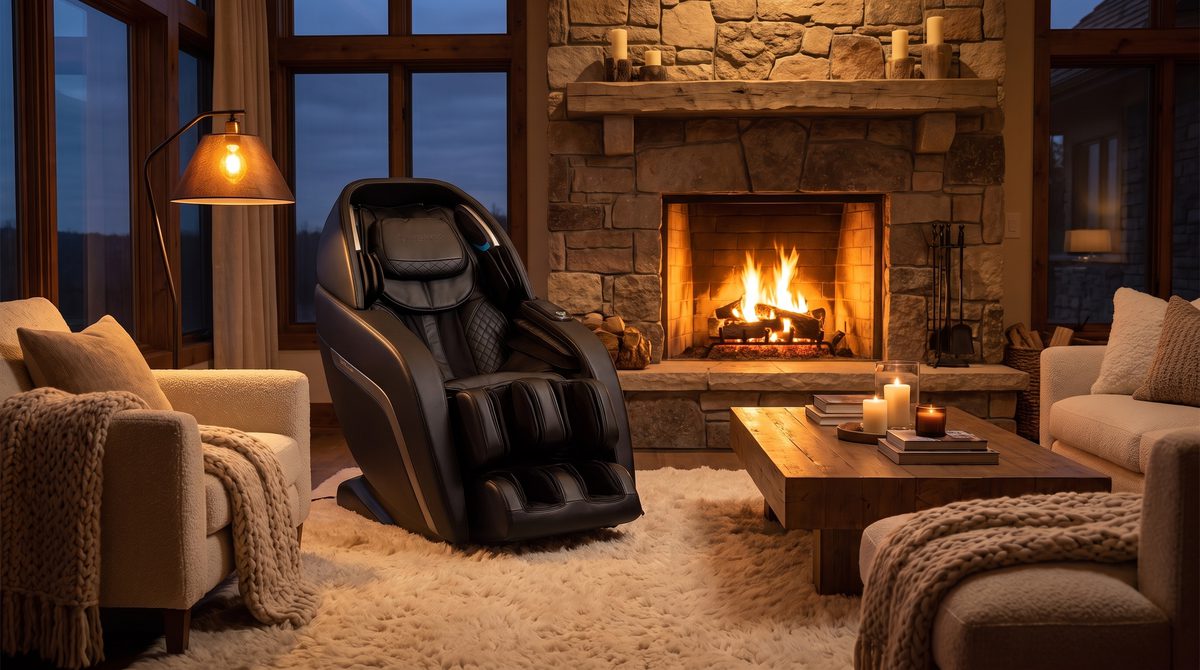
The track decides where the rollers go. The roller mechanism decides how they feel, and that is where the 2D, 3D, and 4D labels come in.
- 2D rollers move up, down, and side to side. Flat and pleasant, but they cannot press deeper into a stubborn spot.
- 3D rollers add forward and back travel, so they push out from the chair into your muscle. That adjustable depth is what makes a massage feel like real hands on a tight lower back.
- 4D adds rhythm and variable speed to that depth, for a more human, kneading quality.
For back pain, the jump from 2D to 3D is the one that counts, because depth control lets you dial pressure to what your body wants that day. Our full explainer on the 2D, 3D, and 4D difference goes deeper if you want it. If your back is often sensitive, look for a chair with adjustable intensity so you can start gentle and build up rather than being stuck at one firmness.
Heat for stiff muscles
Warmth is one of the oldest, most reliable ways to loosen a stiff back, and most quality chairs build lumbar heat into the lower backrest. It is simple and it works.
Heat raises tissue temperature, which makes muscle more pliable and helps you unclench before the rollers even get going. Applied to the lower back, it can take the edge off that deep, tight, sitting-all-day ache. Many people find the heat alone worth the session on a bad day.
Used together, heat and massage complement each other. The warmth softens the muscle, and the softer muscle responds better to pressure and to improved blood circulation. If you tend to run tight in the lower back, treat lumbar heat as a must-have rather than a bonus.
Stretch and gentle decompression
The other feature worth seeking out is a stretch program. Better chairs grip your shoulders and lower body and gently lengthen you, decompressing the spine and opening up the hips and lower back.
This gentle traction can feel wonderful when your back is compressed from a long day of sitting or standing. It is not the same as clinical decompression, and it should never be forced or painful, but a well-designed stretch cycle gives the spine a little breathing room.
Pair stretch with a deep recline and the effect improves. When you lean back into a zero-gravity posture, your weight shifts off the lumbar spine and onto the frame of the chair. Your muscles stop bracing to hold you upright, so the rollers reach deeper for the same pressure and the stretch has more slack to work with. For back relief, that combination of recline, heat, and stretch is the sweet spot.
Setting realistic expectations
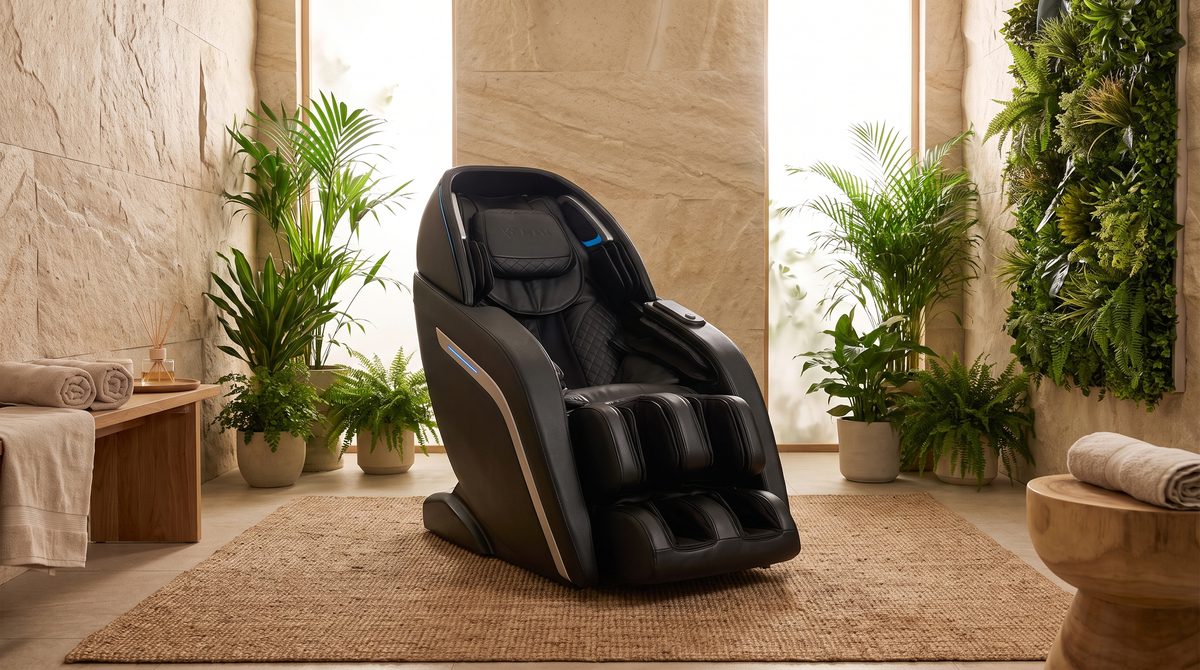
Honesty matters here, because the category is full of overpromises. A massage chair is a comfort and recovery tool, not a medical device. It manages muscle tension and helps you relax. It does not fix a herniated disc, realign your spine, or cure a chronic condition.
Think of it the way you would think of a good foam roller or a standing appointment with a massage therapist, something that keeps everyday tightness in check and helps you feel looser and calmer. Used consistently, a short daily session can meaningfully reduce that background ache. Used as a substitute for real treatment of a real injury, it will disappoint you.
Prices span a wide range, from around $1,599 for a compact entry model up to roughly $16,999 for a flagship, and more money mostly buys deeper rollers, fuller track coverage, and better heat and stretch. You do not need the most expensive chair to get real relief, but for back pain the features above are worth prioritizing over cosmetic extras. If you are still deciding whether the investment makes sense, our take on whether massage chairs are worth it is a fair place to start.
When to see a clinician
A massage chair is for ordinary muscular tightness. It is not the answer for warning signs, and using one in place of care can delay a diagnosis that matters.
Please see a doctor or physical therapist before relying on a chair if your back pain is severe, is not improving, or follows an injury or fall. The same goes for pain that radiates down a leg, comes with numbness, tingling, or weakness, or arrives with fever, unexplained weight loss, or loss of bladder or bowel control. Those are signals for professional evaluation, not a recline and a heat cycle.
If you are pregnant, recovering from surgery, or managing a heart, blood-pressure, or spinal condition, check with your clinician before using a massage chair, since the reclined posture and pressure can affect you differently. A short conversation up front lets you use the chair with confidence rather than worry.
Frequently Asked Questions
Do massage chairs help back pain?
For everyday muscular tightness, often yes. Gentle massage can loosen stiff muscles around the lower back and hips, improve local blood circulation, and help you relax, which many people find eases that familiar dull ache. It will not resolve a structural problem like a disc issue, so match your expectations to muscle relief rather than a cure.
Is L-track or S-track better for back pain?
For lower-back and hip relief, L-track is usually the better choice. Its longer rail continues under the seat to reach the glutes and upper hamstrings, which are often the real source of lower-back tightness. S-track gives a great upper and mid-back massage but stops around the beltline.
How long and how often should I use it?
Short and regular beats long and occasional. Ten to fifteen minutes a day is plenty for most people, and consistency is what keeps muscle tension from building back up. Listen to your body, keep the intensity comfortable, and skip a session if an area feels sore or irritated.
Can a massage chair make back pain worse?
It can if you push the intensity too high or use it on an area that is injured or inflamed. Start gentle, avoid grinding on a painful knot, and stop if something hurts rather than simply feeling firm. If pain increases or persists, set the chair aside and see a clinician.
Do I need heat and stretch, or is basic massage enough?
Basic massage helps, but heat and stretch add a lot for back tension. Lumbar heat softens stiff muscle so it responds better to pressure, and a gentle stretch program decompresses the spine and opens the hips. If back relief is your main goal, they are worth prioritizing.
Find a chair that fits your back
The right massage chair for back pain is the one that reaches the areas you actually feel it, at a pressure you enjoy. Prioritize L-track coverage, adjustable roller depth, lumbar heat, and a gentle stretch, then let a short daily session do its quiet work. Browse the collection with those features in mind, and if you want help narrowing the field, our guide to choosing a massage chair walks you through it step by step.
The chair featured in this article
Kyota Yutaka M898 4D Massage Chair
View this chair →