How to Compare Massage Chairs Before You Buy
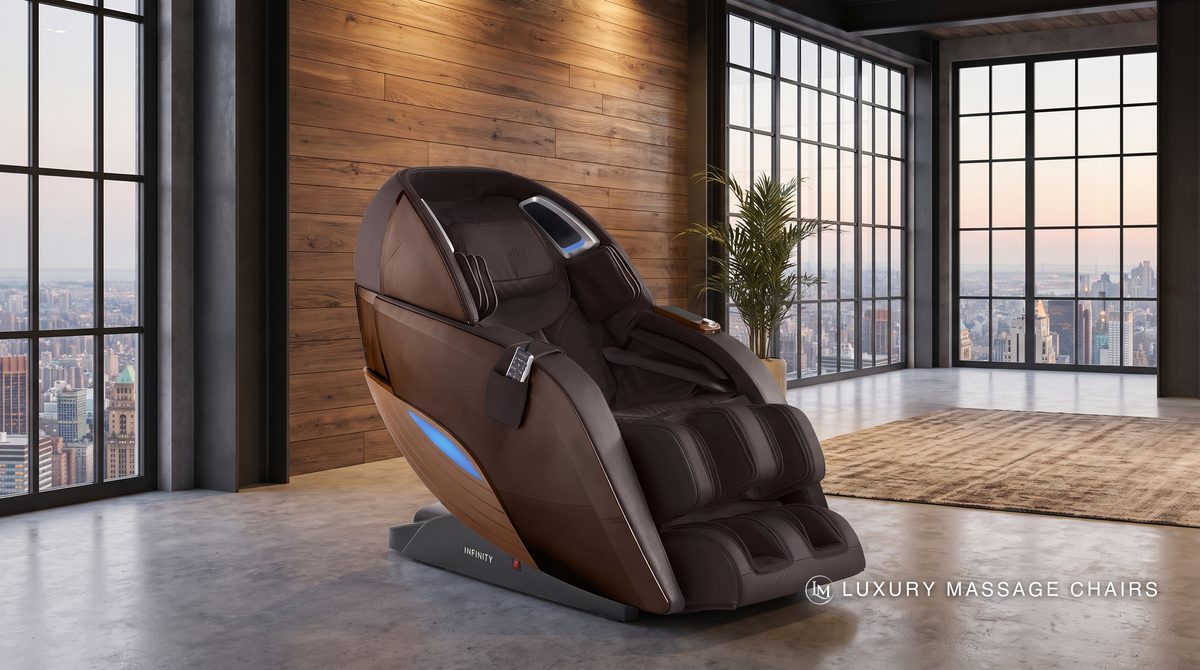
Comparing massage chairs can feel like comparing spaceships. Every model claims more rollers, more airbags, and more programs than the last, and the spec sheets rarely line up neatly. Learning how to compare massage chairs is really about knowing which handful of things actually decide whether you will love the chair, and which are noise.
The good news is that the list is shorter than the marketing suggests. Once you can read a few core specs and ask the right questions, any two chairs become easy to lay side by side, whatever the badge on them.
This guide gives you a practical framework. We will walk through track shape and coverage, roller dimension, the features that matter, warranty and support, body fit, footprint, and how to actually test a chair before you commit.
Start with track shape and coverage
The single most important spec is the one buyers overlook most. The track is the rail the rollers travel along, and its shape sets how much of your body gets massaged. It is the first filter to apply when you compare two chairs.
An S-track follows the spine from the neck to the lower back. An L-track keeps going under the seat to reach the glutes and hamstrings. An SL-track blends both. Coverage is hard to add later, so decide early how far down your body you want the massage to reach. Our full explainer on massage chair track types breaks down the trade-offs.
- Ask how far down the rollers travel, not just the letter on the box
- Match the reach to where your body holds tension
- Treat coverage as a deciding factor, not a nice-to-have
Compare roller dimension honestly
The next core spec is the roller dimension, written as 2D, 3D, or 4D. Each number is a direction the rollers can move. 2D works on a flat plane, 3D adds adjustable depth, and 4D adds variation in rhythm and speed for a more human stroke. Our guide to a 2D vs 3D vs 4D massage chair covers exactly what each tier feels like.
When you compare two chairs, do not assume the higher number wins automatically. A well-built 3D chair can out-massage a poorly tuned 4D one. Use the dimension as a ceiling of capability, then judge how well the whole chair delivers it. A quiet, well-engineered chair with a great body scan often beats a spec-heavy chair that fits you badly.
It also helps to notice how quiet a chair runs. Motors and gears make some noise by nature, but a well-built chair keeps it to a low hum rather than a grind. That matters more than you would expect if you plan to use the chair in a shared room, late at night, or while someone nearby is watching television.
Weigh the feature set that matters
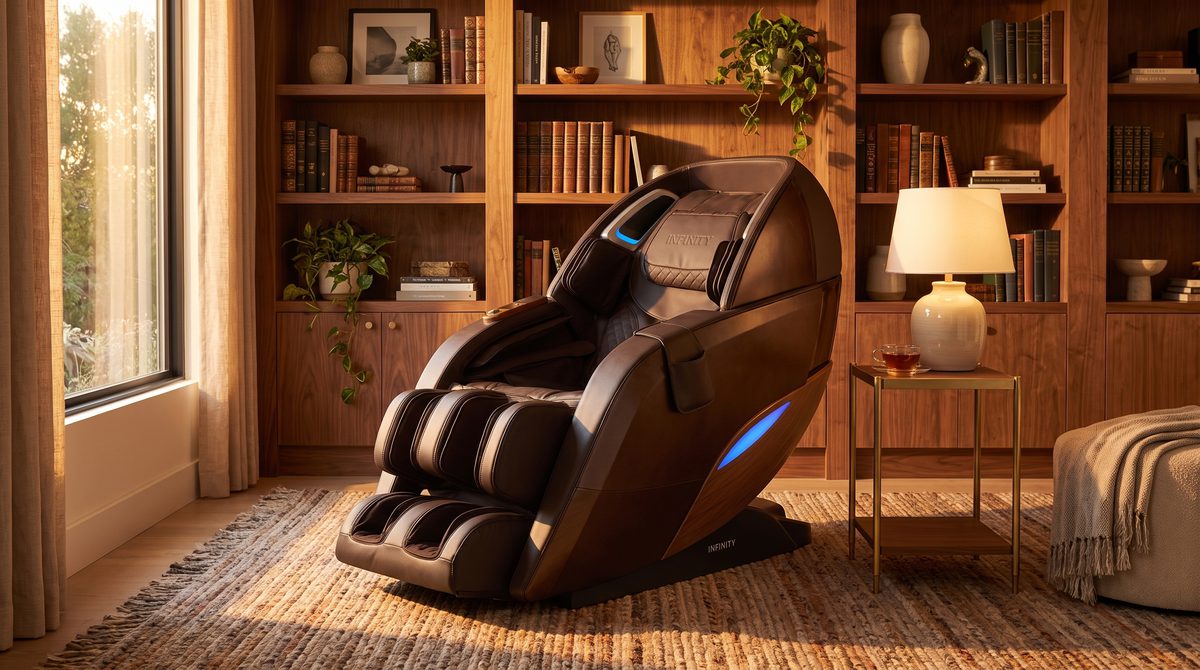
Massage chairs pile on features, and only some change how the massage feels. When comparing, sort the feature list into things you will use every session and things that are pure atmosphere. Our rundown of massage chair features goes deeper, but the short version is easy to hold in your head.
- Heat therapy relaxes muscle and often makes the rollers feel deeper, so it earns its place
- Airbag compression delivers the enveloping squeeze on arms, hips, and calves that rollers cannot
- Foot and calf rollers are a highlight if you are on your feet all day
- Body stretch programs gently decompress the spine and open the hips
- Space saving recline lets a chair sit close to a wall
- Extras like chromotherapy lighting and speakers are pleasant mood features, not reasons to choose a chair
A useful trick is to weight each feature by how often you will actually feel it. Heat and air compression show up in nearly every session. Chromotherapy is a nice glow you stop noticing after a week.
Do not skip warranty and support
Two chairs with identical specs are not equal if one is backed by strong service and the other is not. A massage chair is a piece of furniture with motors, gears, and electronics inside, and over years of use, support matters.
When comparing, look past the massage and ask about the ownership side.
- The length of coverage on parts, labor, and the frame
- Whether service is handled by US-based support or shipped overseas
- How in-home service or part replacement actually works
- What real owners say about getting help after the sale
A slightly less flashy chair with responsive, US-based support and a solid warranty is often the smarter buy. You are not just buying a massage, you are buying the years of use that follow. Keeping up with simple maintenance also protects that investment and keeps small issues from becoming big ones.
Check body fit and height range
A chair that does not fit your body cannot give a good massage, no matter how advanced it is. This is where many buyers go wrong, focusing on features while ignoring whether the chair suits their frame.
Every chair has a comfortable height and size range. Taller users need a track long enough for the neck rollers to reach up properly, and broader users need airbags and a seat wide enough to feel right. A good body scan helps a chair adapt to you, but it cannot stretch a track that is too short for your spine.
- Confirm the recommended height range covers everyone who will use it
- If two people of very different sizes will share it, prioritize adjustability
- Remember that a great scan optimizes fit but cannot fix a track that is too small
Measure your space and footprint
The most capable chair in the world is useless if it does not fit your room. Before you compare features, compare footprints against the actual space you have.
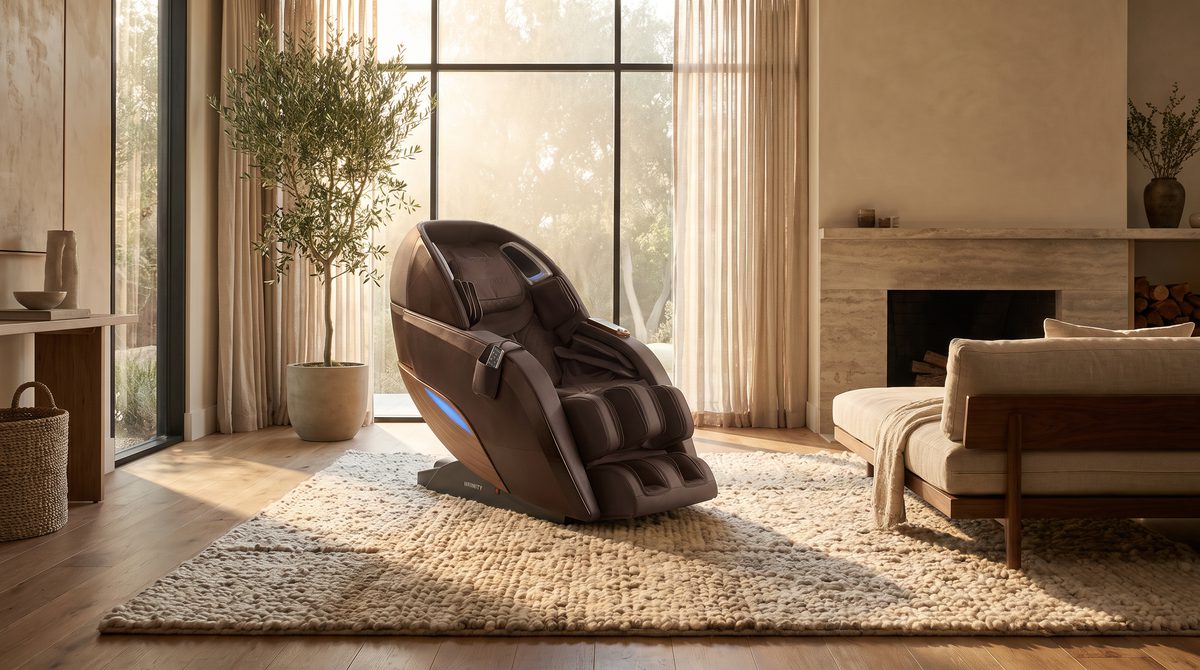
Massage chairs recline, and a traditional design needs clearance behind it to lie back. Space-saving or wall-hugging designs slide the seat forward as they recline, so they need only inches of room. Measure your spot, including the swing of the footrest and the recline clearance. Our guide to chairs for small spaces covers this in detail if your room is tight.
How to actually test and evaluate a chair
Once you have shortlisted two or three chairs on paper, the last step is to evaluate them as closely as you can before deciding.
If you can sit in a chair, run a full auto program rather than a thirty-second sample. Notice whether the rollers reach your real trouble spots, whether the intensity range suits you, and whether the fit feels right for your height. If you are buying online, lean on detailed specs, the recommended height range, video of the chair in motion, and honest owner feedback. A generous return policy also lowers the risk of a remote purchase.
Bring a simple checklist with you or keep one on your phone. Note the track type, the roller dimension, the height range, the footprint, and the warranty for each chair, then score how well each one reached your tension and how the fit felt. Writing it down turns a blur of demos into a clear side-by-side you can actually decide from.
It helps to keep your priorities written down so a flashy demo does not sway you off course. If you want the whole decision laid out end to end, our complete buying guide walks it start to finish.
Frequently Asked Questions
What is the most important thing when comparing massage chairs?
Coverage and fit come first. The track shape decides how much of your body gets massaged, and the chair's size range decides whether it suits your frame. A chair can have the best rollers on the market and still disappoint if the track is too short for you or stops before it reaches your lower back.
Is a higher price always a better massage chair?
Not always. Price often tracks capability, but a well-built mid-range chair that fits your body and comes with strong support can beat a pricier chair that fits you poorly. Compare the specific things that affect your daily use rather than assuming more money means more satisfaction.
How much should warranty and support influence my choice?
A lot, especially for a purchase you expect to keep for years. Two chairs with similar specs are not equal if one has responsive, US-based support and a long warranty and the other does not. Factor in coverage length and how service actually works before you decide.
How do I compare chairs if I cannot try them in person?
Rely on detailed specs, the recommended height range, video of the chair working, and honest owner reviews. Confirm the track shape and roller dimension, check the footprint against your room, and favor sellers with a fair return policy so a remote purchase carries less risk.
Ready to compare
Comparing massage chairs stops being overwhelming once you focus on the few specs that decide satisfaction. Lead with track coverage and body fit, weigh roller dimension and the features you will genuinely use, then let warranty, support, and footprint break any ties. When you are ready to line up real options against this framework, browse the full collection and put your shortlist head to head.
The chair featured in this article
Dynasty 4D Massage Chair
View this chair →