Massage Chairs for Neck and Shoulder Tension
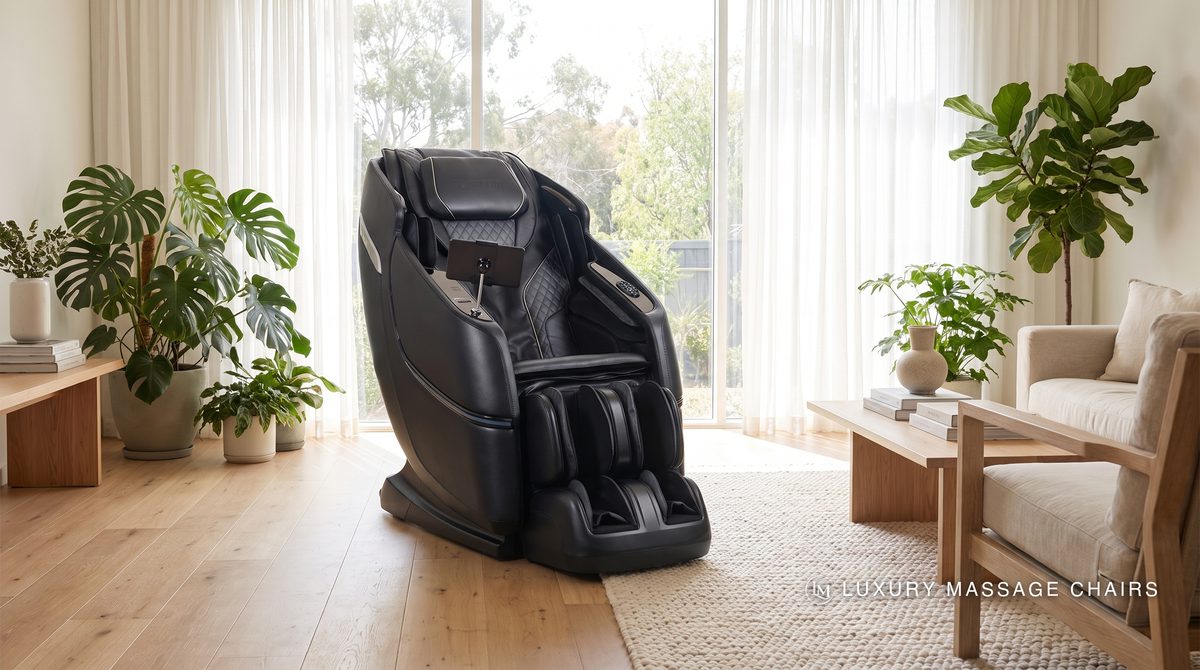
If your neck feels tight by mid afternoon and your shoulders sit up near your ears, you are in good company. A massage chair for neck and shoulder pain will not rebuild your posture for you, but the right one can take the edge off the daily strain that builds when you sit and stare at a screen for hours. That relief matters, because a looser upper back makes it easier to sit tall and move well the rest of the day.
The trick is knowing what actually works on the neck and shoulders, which is a small and bony region compared with the broad muscles of the back. Not every chair does it well. Some flood the lower back with power and barely reach the trapezius, the big muscle that runs from the base of your skull out to each shoulder.
This guide walks through the features that matter for the upper body, how to use them, and when tension is a sign to see a clinician rather than reach for a chair.
Why the neck and shoulders carry so much strain
The muscles around your neck and shoulders spend all day holding your head up. An adult head is heavy, and every inch it drifts forward as you lean toward a monitor adds load to the muscles at the back of the neck and across the top of the shoulders. Hold that position for eight hours and those muscles rarely get a break.
Stress piles on top of the mechanical load. Many people clench and lift their shoulders without noticing when a deadline looms. By evening the trapezius and the muscles along the neck feel like tight cords. A chair that targets this zone gives those muscles a reason to let go, which is often the first step toward feeling loose again.
Upper body rollers and why reach matters
The heart of any good chair is the roller mechanism that travels up and down beside your spine. For neck and shoulder relief, two things decide whether a chair helps here.
- How high the rollers travel. Cheaper chairs stop the rollers around the mid back. A capable chair carries them up to the base of the neck and out toward the shoulder blades, which is exactly where upper body tension lives.
- How the rollers move. Rollers that can knead in small circles and press in and out, rather than only sliding up and down, feel far more like human thumbs working a knot.
Chairs that scan your body before a session tend to place the rollers more accurately on the neck and shoulders, so the pressure lands on muscle rather than bone. If you want to understand how that mapping works, our guide on the AI body scan feature breaks it down.
S track and L track for the upper body
You will see chairs described by the shape of their roller path. An S track follows the natural curve of the spine and tends to hug the neck and upper back closely. An L track extends the path down under the seat to reach the glutes and hamstrings. Many people who buy mainly for neck and shoulder relief do well with either, though the way a track curves near the top is what decides how it feels on the trapezius. Our S track and L track comparison goes deeper if you want to weigh the trade.
Air compression for tight shoulders
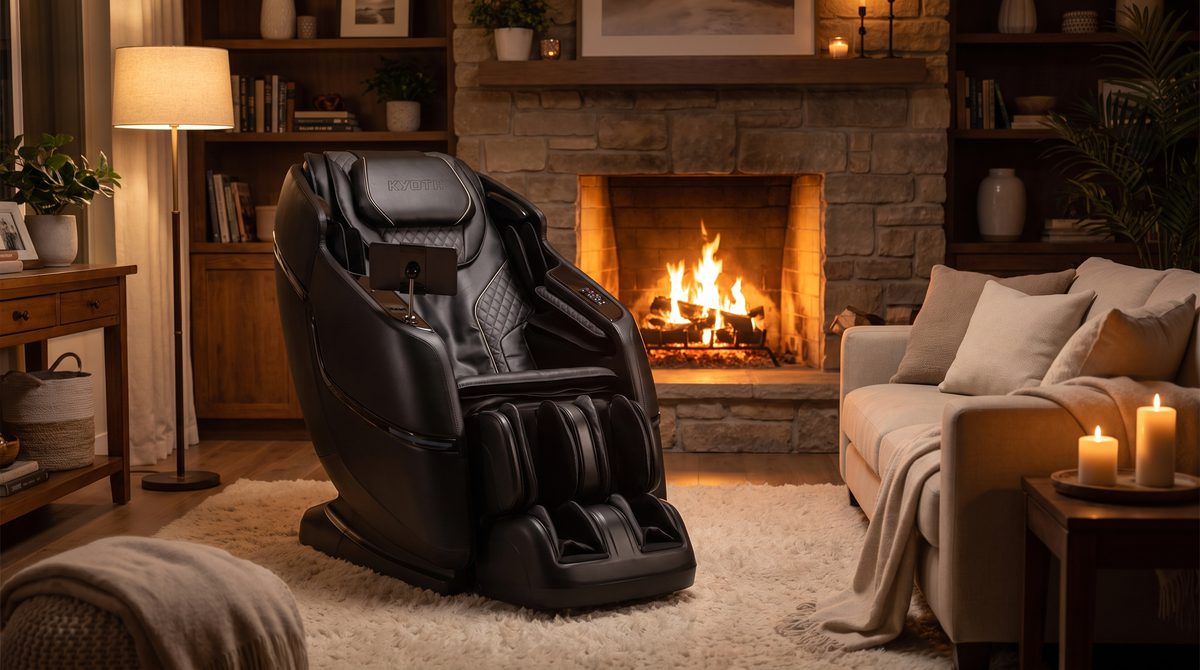
Rollers handle the muscles beside the spine, but the shoulders themselves respond better to a different tool. Air compression uses airbags that inflate and release to squeeze and knead. On the shoulders, well placed airbags cup the joint and press inward, which feels like broad, gentle pressure rather than a focused point.
This matters because the shoulder is a wide, rounded area that a single roller cannot wrap around. Compression fills that gap. Look for chairs with dedicated shoulder airbags rather than only arm and leg bags, and check that the shoulder position can be adjusted, since shoulder width varies a lot from person to person.
Heat where you need it
Warmth relaxes muscle and makes the rest of a session feel better. Many chairs place heating elements in the lower back, which is useful but does little for the neck. A few carry heat higher, into the mid and upper back, and that warmth loosens the shoulders before the rollers arrive.
Heat is a comfort feature, not a cure. It feels good and can help tight muscles ease, and that is reason enough to value it. If neck warmth is a priority for you, confirm where the heating elements actually sit before you buy, because product descriptions often say heat without saying where. Our heat therapy guide covers what to expect.
Posture, desk strain, and the daily habit that matters most
A chair treats the symptom. Your desk setup shapes the cause. If your monitor sits low and you crane down to read it, or your chair pushes your shoulders forward, the tension will keep coming back no matter how good your evening massage is.
A few small changes tend to help more than any single gadget.
- Raise your screen so the top of it sits near eye level, which keeps your head stacked over your shoulders.
- Take a short break every hour to roll your shoulders and look around the room.
- Keep your forearms supported so your shoulders do not have to hold your arms up all day.
Use the chair as the recovery half of that routine. Ten to fifteen minutes on an upper body program in the evening gives the muscles a chance to release what the day loaded onto them. People who also sit for a living may find our notes for desk workers useful, since the lower back and hips take a beating from sitting too.
How to use a chair for neck and shoulder relief
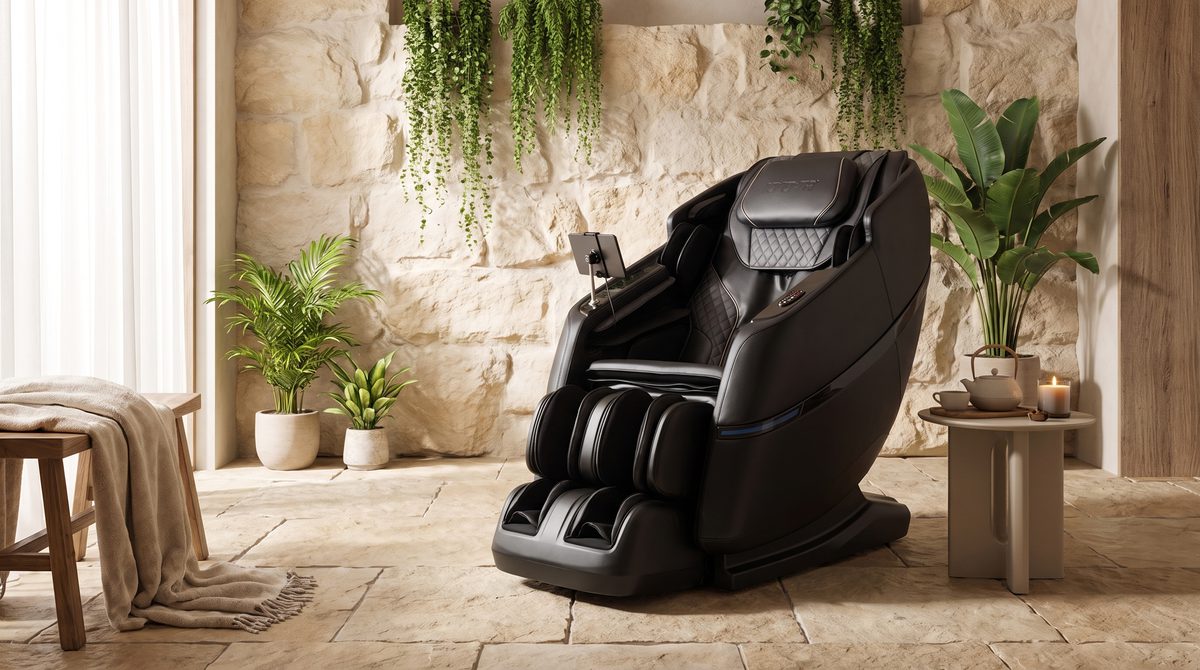
More power is not better here. The neck is delicate, and hammering it does more harm than good. Start on a low intensity and let the muscles adjust. If a chair offers a program aimed at the neck and shoulders, begin there rather than a full body setting that spreads attention everywhere.
- Sit fully back so your spine meets the rollers and your shoulders reach the airbags.
- Keep sessions short and frequent rather than long and rare, since a little most days beats a marathon once a week.
- Breathe slowly and let your shoulders drop away from your ears while the chair works.
If a program feels too strong on the neck, most chairs let you dial back the roller speed or width. There is no prize for enduring pain.
When to see a clinician
A massage chair is for everyday tension and stiffness, the ordinary kind that comes from long days and stress. It is not a treatment for injury or disease, and it makes no promise to cure anything.
See a clinician for persistent or serious symptoms. Pain that travels down an arm, numbness or tingling in the hands, weakness, a stiff neck with fever, or tension that does not ease after a couple of weeks all deserve a professional look. The same is true if pain follows a fall or accident. A chair should never replace that visit, and using one on an undiagnosed problem can delay care you need.
Frequently Asked Questions
Can a massage chair help with neck and shoulder pain from desk work?
For the everyday tightness that builds from sitting and screen time, many people find real relief from a chair that reaches the upper back with rollers and cups the shoulders with air compression. It eases muscle tension and helps you relax. It does not fix the underlying posture habits, so pair it with a better desk setup and regular movement for the best result.
Are rollers or air compression better for the shoulders?
They do different jobs and work best together. Rollers press into the muscles beside your neck and spine, while air compression wraps around the rounded shoulder joint that rollers cannot reach. A chair with both, placed high enough to hit the upper body, covers the shoulders far better than either tool alone.
How much pressure should I use on my neck?
Start low. The neck is a small, bony area and heavy pressure there is uncomfortable and unnecessary. Begin gentle, let the muscles adjust, and raise intensity only if it still feels good. If any setting causes sharp pain, stop and reduce it.
How often should I use a massage chair for neck tension?
Short daily sessions of ten to fifteen minutes tend to work better than one long session a week. Frequent, gentle use gives tight muscles regular chances to release without overworking a sensitive area.
Will a massage chair fix my posture?
No. A chair relaxes the muscles that get tight from poor posture, which can make sitting tall feel easier, but it cannot change your habits. Lasting improvement comes from your desk setup, movement breaks, and strengthening, with the chair as a helpful recovery tool alongside them.
Find a chair that reaches where it hurts
If neck and shoulder tension is what drives you to shop, focus on reach, roller quality, real shoulder airbags, and where the heat sits. A chair that gets all four right will feel like a genuine part of your evening. Browse the collection with those four points in mind, and read our back pain guide if the ache runs lower down your spine as well.
The chair featured in this article
Kyota Kizuna M688 Massage Chair
View this chair →