Massage Chairs for Desk Workers Who Sit All Day
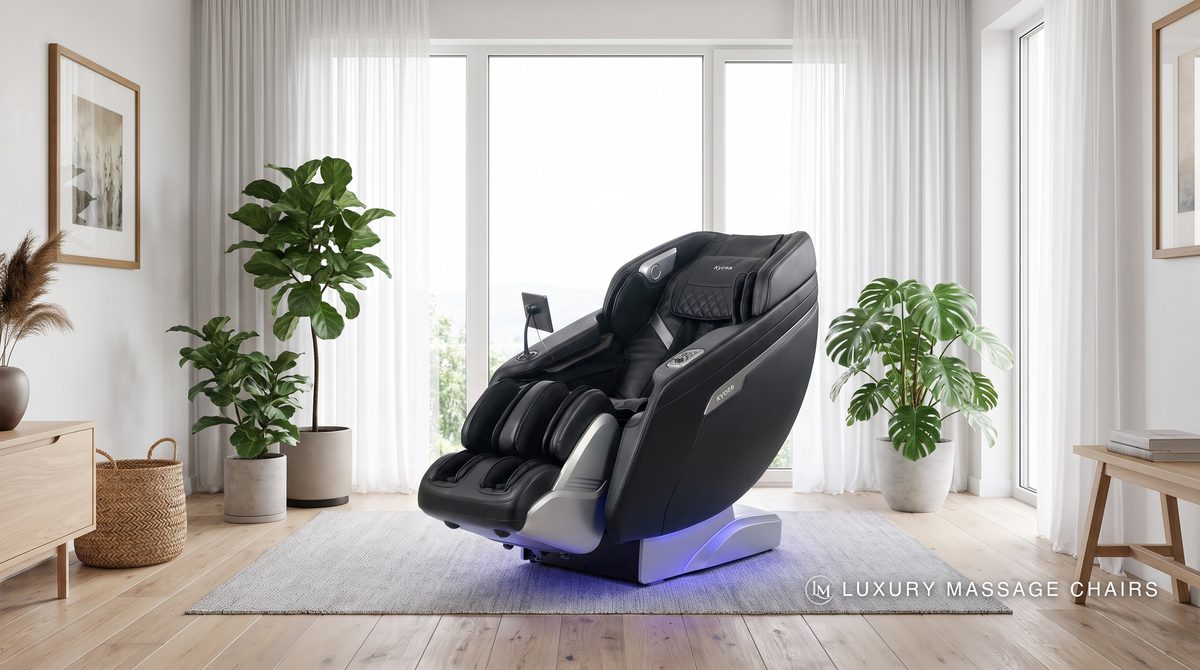
If you spend your workday in a chair, your body knows it. The lower back stiffens, the hips grow tight, and by evening you feel wrung out in a way that has nothing to do with effort. A massage chair for office workers is built around that specific problem, the slow damage of sitting still for hours, and it can make a real difference to how you feel at the end of the day.
Sitting is not the villain some headlines make it out to be, but sitting for eight or ten hours without a break is genuinely hard on the body. The muscles that should move stay locked in one position. Blood pools in the legs. The hip flexors shorten. A chair will not undo a sedentary job on its own, yet used well it becomes the recovery half of a healthier daily rhythm.
This guide covers where sitting hits hardest, which chair features answer those problems, and how a short daily session beats the occasional long one.
What sitting all day does to your body
When you sit, the same muscles hold the same load for hours. The lower back carries your upper body without the support that standing and walking provide. The hip flexors at the front of your hips stay bent and slowly tighten. The glutes, which should be doing real work, switch off. Meanwhile the muscles of the upper back stretch and weaken as you round forward toward a screen.
The result is a familiar set of complaints. A dull ache low in the back. Tight hips that feel stiff when you finally stand. Heavy, restless legs. None of this is dramatic on any single day, which is exactly why it sneaks up on people. It builds quietly over months of desk time.
A massage chair meets that pattern head on by working the very areas that sitting punishes most.
Lower back and hip relief
For a desk worker, the lower back and hips are the main event. Two features matter most here.
- L track rollers. An L track extends the roller path down past the lower back and under the seat toward the glutes and hips. That reach matters, because the tension from sitting lives exactly where a shorter track stops. Our S track and L track comparison explains the difference in detail.
- Hip and seat airbags. Air compression around the hips and seat squeezes muscles that rollers alone cannot reach well. For anyone whose hips feel locked after a long day, this compression is where the relief lands.
Deeper roller styles, sometimes called 3D or 4D, press further into the muscle and adjust how far they extend. That control lets you get real pressure into a stubborn lower back without it feeling harsh everywhere else, which is a real plus for anyone whose desk day settles into one stubborn knot.
If the ache in your back is the main reason you are shopping, our dedicated back pain guide goes deeper on the topic.
The stretch program is underrated
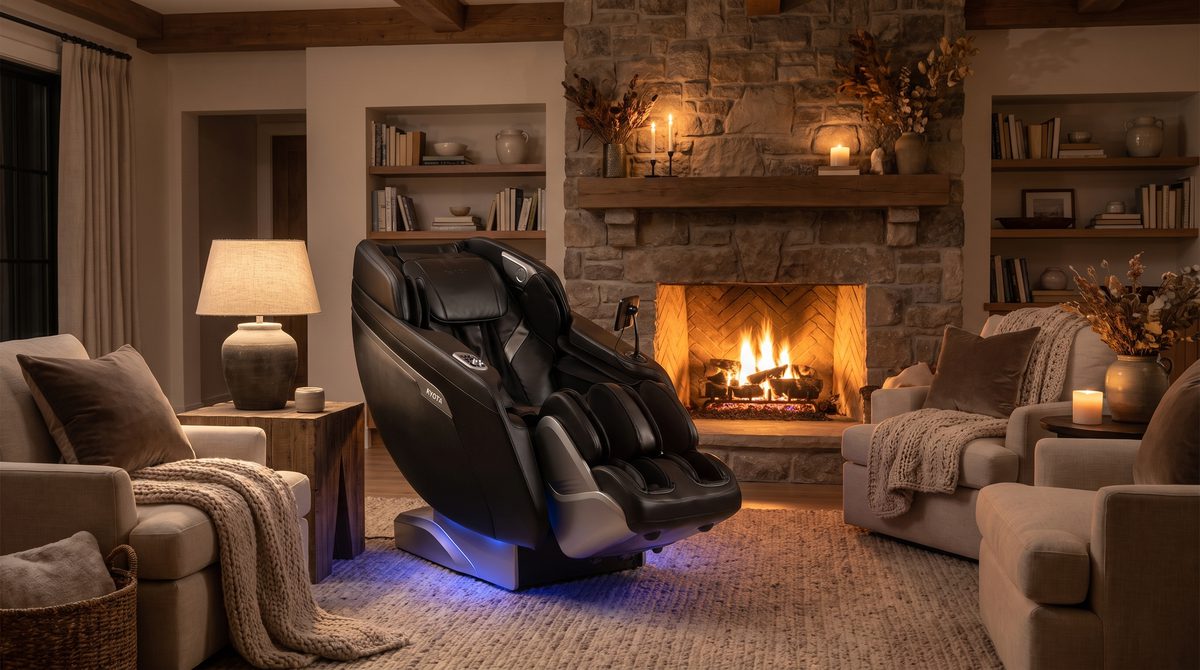
Ask most desk workers what their body craves after a long sitting day and the honest answer is a good stretch. Many chairs include a stretch program that reclines you, holds your lower body with airbags, and gently traverses the rollers to lengthen the spine and open the hips.
For people who sit all day, this is often the most valued feature in the whole chair. It counteracts the shortening that hours of sitting cause. A stretch program does not replace real mobility work, but it gives tight hips and a compressed lower back a gentle daily lengthening they rarely get otherwise. Our stretch program overview explains how the motion works and what to expect.
Circulation and heavy legs
Sitting slows the return of blood from your legs, which is why they can feel heavy and restless late in the day. Air compression on the calves and feet gives a rhythmic squeeze and release that many desk workers find refreshing after hours at a desk.
Pair that with zero gravity recline, which raises your legs toward the level of your heart, and the tired, heavy feeling in the legs often eases. Treat these as comfort and relaxation features rather than medical treatment. They feel good and they help you unwind, which is reason enough.
Short daily sessions beat the weekend marathon
Here is the habit that matters most. A ten to fifteen minute session at the end of the workday, done most days, does far more for a desk worker than a single long session on the weekend. Tension from sitting builds daily, so relief works best daily too.
- Keep a session short and regular rather than long and rare.
- Aim for the end of the workday or the early evening, when the day's tension has fully set in.
- Rotate between a lower back focus, a stretch, and a full body session depending on how you feel.
A short evening routine on the chair also pairs well with better sleep for some people, since winding down helps the body shift toward rest. If that appeals, our notes on massage chairs and sleep are worth a look.
Do not let the chair replace movement
A massage chair is a recovery tool, not a license to sit even longer. The single best thing a desk worker can do is break up sitting with movement, and the chair works best as a complement to that, not a substitute.
- Stand and walk for a couple of minutes every half hour or so.
- Adjust your desk so your screen is at eye level and your feet rest flat.
- Use the chair in the evening to release what the day loaded on, not as an excuse to skip your walks.
Think of it as a rhythm. Move often through the day, then recover deliberately in the evening. That pairing does more than either habit alone.
When to see a clinician
A massage chair eases the ordinary aches of desk life, the stiffness and tension that come from sitting too long. It is not a treatment for injury or disease and it will not cure back problems.
See a clinician for persistent or serious symptoms. Back pain that radiates down a leg, numbness or tingling, weakness, pain that wakes you at night, or an ache that does not ease after a couple of weeks all deserve a professional look. The same is true for pain that follows a fall or lifting injury. A chair helps with everyday tension, but it should never delay care for a problem that needs one.
Frequently Asked Questions
Can a massage chair help with lower back pain from sitting all day?
For the everyday stiffness and dull ache that come from long hours in a chair, many desk workers find real relief from a chair that reaches the lower back and hips. An L track and hip airbags target exactly the areas sitting punishes. It eases muscle tension, though it cannot fix the root cause, so pair it with regular movement and a better desk setup.
How long should a desk worker use a massage chair each day?
A short session of ten to fifteen minutes at the end of the workday, done most days, works better than one long session on the weekend. Tension from sitting builds daily, so frequent, gentle relief keeps up with it far better than an occasional marathon.
What massage chair features matter most for office workers?
Focus on reach into the lower back and hips, which usually means an L track, plus hip and seat airbags, a stretch program to counter the shortening that sitting causes, and leg compression for heavy, tired legs. Zero gravity recline adds comfort. Together these target the specific pattern that desk work creates.
Is a stretch program worth it for someone who sits all day?
For many desk workers it is the most valued feature in the chair. Sitting shortens the hip flexors and compresses the lower back, and a gentle stretch program lengthens both. It does not replace real mobility work, but it gives tight areas a daily stretch they rarely get otherwise.
Will using a massage chair make it fine to sit longer?
No. The chair is a recovery tool, not a reason to sit more. The biggest win for a desk worker is breaking up sitting with regular movement through the day, then using the chair in the evening to release the tension that built up. Use them together rather than trading one for the other.
Recover from the desk, one evening at a time
If a day of sitting leaves your lower back stiff and your hips tight, look for a chair that reaches those areas, offers a real stretch program, and eases heavy legs. Used in short daily sessions, it becomes the recovery half of a healthier routine. Browse the collection with sitting strain in mind, and if the tension runs higher into your neck and shoulders, our neck and shoulder guide covers that zone.
The chair featured in this article
Kyota Kiyomi M698 4D Massage Chair
View this chair →